First Confirm What Each Material Name Means
Alcantara is a specific branded material with a soft, suede-like surface. A generic microfiber or suede-touch textile must not be presented as Alcantara. Confirm the required identity, supply route, available color and supporting material information before sampling.
Full-grain leather retains the natural outer grain of the hide. Grain character, temper, shade, thickness and finish still vary from article to article, so full-grain is not a complete product specification.
Compare Hand Feel and Visual Character
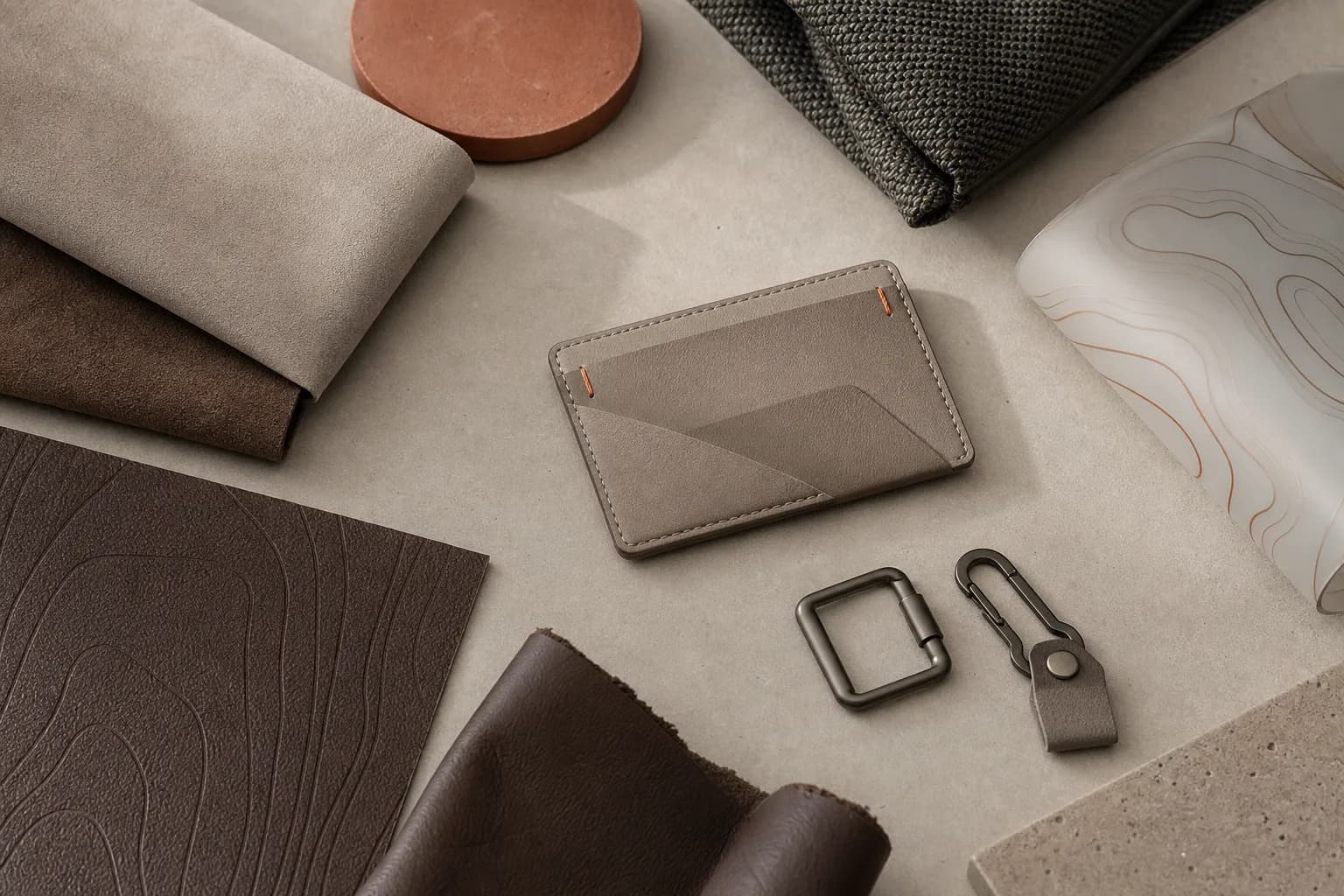
Alcantara feels soft and warm with a matte appearance. Its nap can change the way color reads as the panel direction or light changes. That effect can become part of a restrained, texture-led design.
Full-grain leather shows natural grain and variation. Depending on temper and finish, it can feel supple, dry, waxy or firm and may develop visible character with handling. Buyers should agree acceptable natural marks and shade tolerance.
Choose by Product Format and Wear Pattern
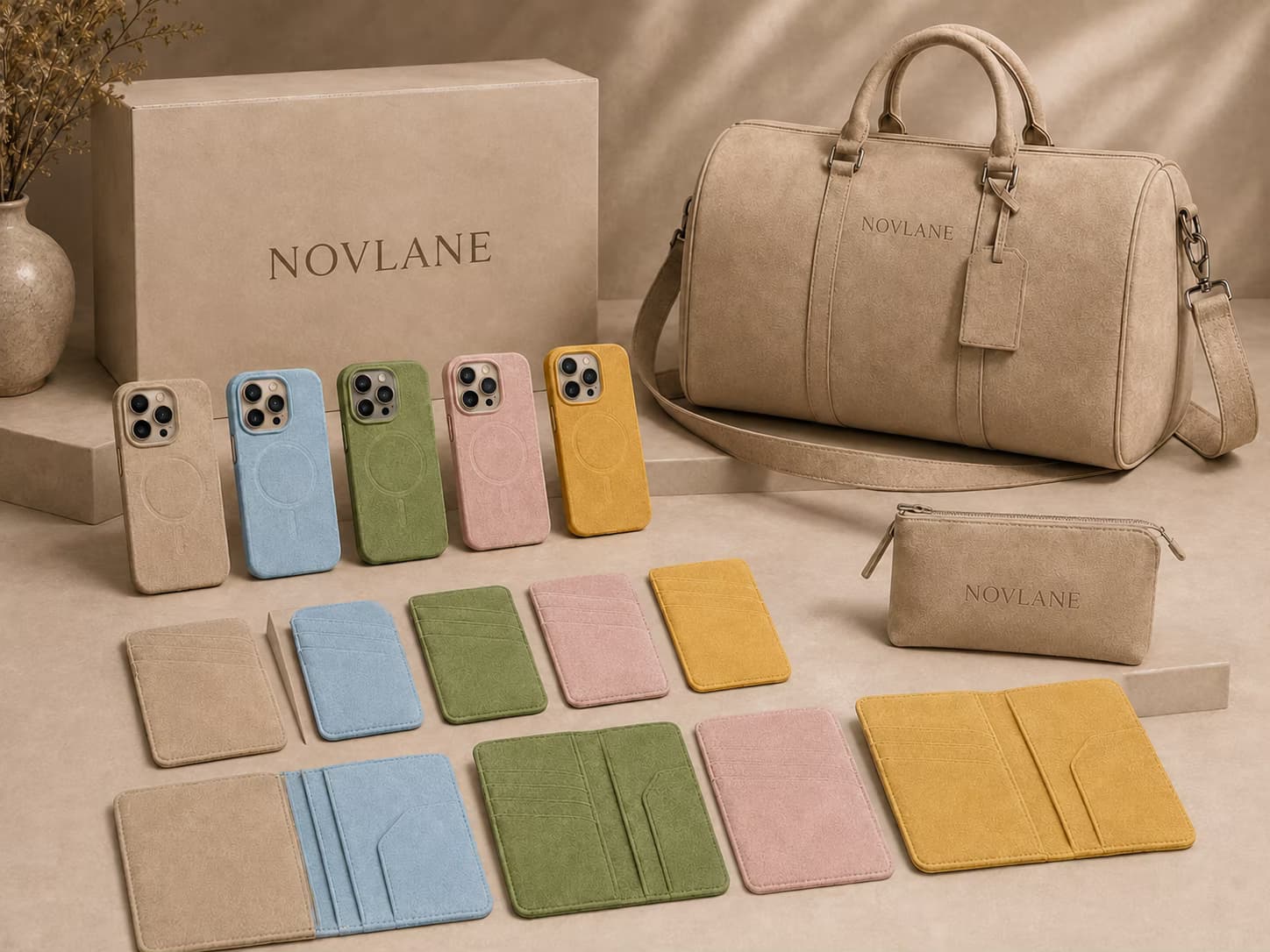
Alcantara can be evaluated for selected handbags, wallets, cardholders, sleeves, travel organizers and interior panels. Backing, corner protection and cleaning expectations matter where the soft surface receives repeated contact.
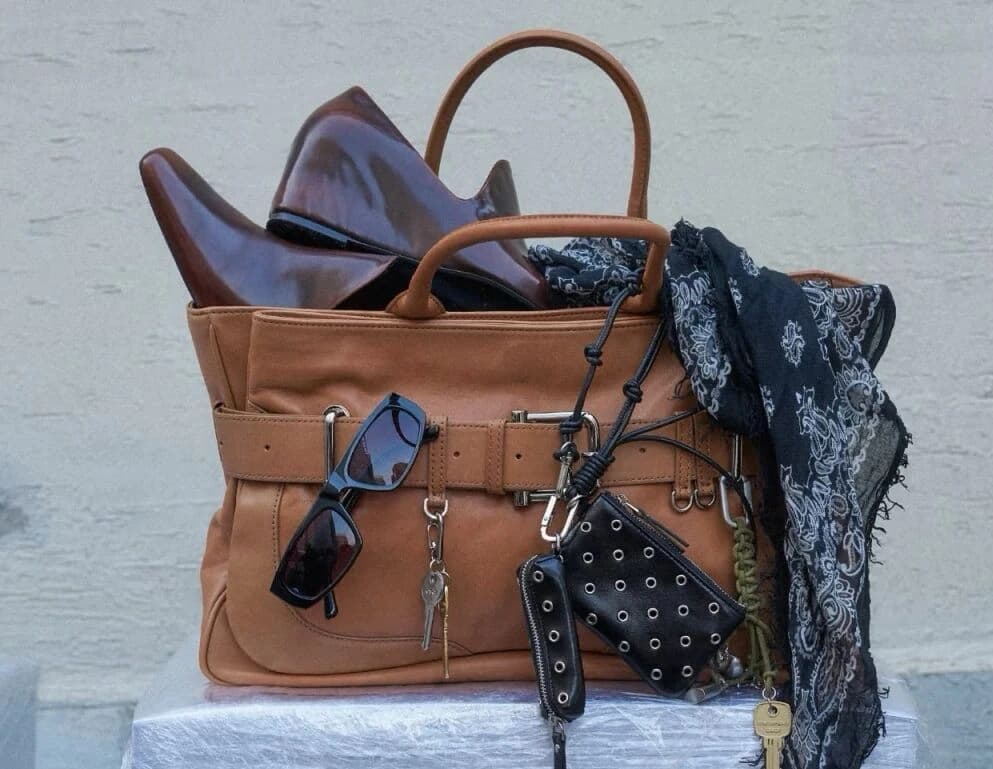
Full-grain leather can support structured or soft handbags, handles, trims, wallets and cardholders. Weight, skiving, folds and reinforcement should be planned around the silhouette and expected load.
Product-specific checks
- Handle and strap anchors
- Corners and base
- Wallet folds and card slots
- Hardware contact
- Opening and closure
- Interior and lining
Review Branding and Color on Physical Swatches
Embroidery, patches, metal logos and selected print or perforation methods can be evaluated on Alcantara. The sample should confirm nap response, surface pressure and the effect under physical lighting.
Full-grain leather supports established techniques such as embossing, debossing, foil and metal branding, subject to the finish and thickness. Color, edge paint, stitch and metal finish should be approved as one palette.
Set Care Expectations Before Approving the Material
For Alcantara, review moisture, cleaning method, surface pressure, corners and other high-contact areas. For full-grain leather, review scratches, moisture, color transfer, natural variation and the care required by the selected finish.
Neither material is universally better. The stronger choice is the one whose appearance, wear behavior, construction and care expectations match the product and customer.
Build a Useful Side-by-Side Sample Review
Compare the candidate swatches in the intended color and thickness, then apply the proposed logo and place them beside lining, thread, edge and hardware references. For a close decision, test a critical panel or small prototype rather than judging loose swatches alone.
Record material identity, color, panel direction, reinforcement, edge method and approval notes. Commercial terms can be reviewed once the material and construction direction is sufficiently clear.
Frequently asked questions
Can Alcantara be used for handbags and wallets?
Yes. Alcantara can be evaluated for handbags, wallets, cardholders, sleeves and trims when its nap direction, backing, fold behavior, high-contact areas and cleaning expectations suit the construction.
Is full-grain leather always more durable than Alcantara?
Not as a universal rule. Durability depends on the exact material article, finish, construction, wear pattern and care. The intended product should be sampled and reviewed.
Can Alcantara and leather be combined?
Yes. Mixed-material constructions can be evaluated when thickness, color, edge treatment, seam behavior and care expectations work together.
Continue the development review with Alcantara Material Guide, Genuine Leather Material Guide, Alcantara Accessories, Alcantara Bag Development, Full-Grain Leather Handbags, Request a Sample.