CUSTOM PRODUCTS · PRIVATE LABEL · OEM / ODM
 Material innovation · Product development
CUSTOM PRODUCTS · PRIVATE LABEL · OEM / ODM
Private Label Tote Bag Manufacturer
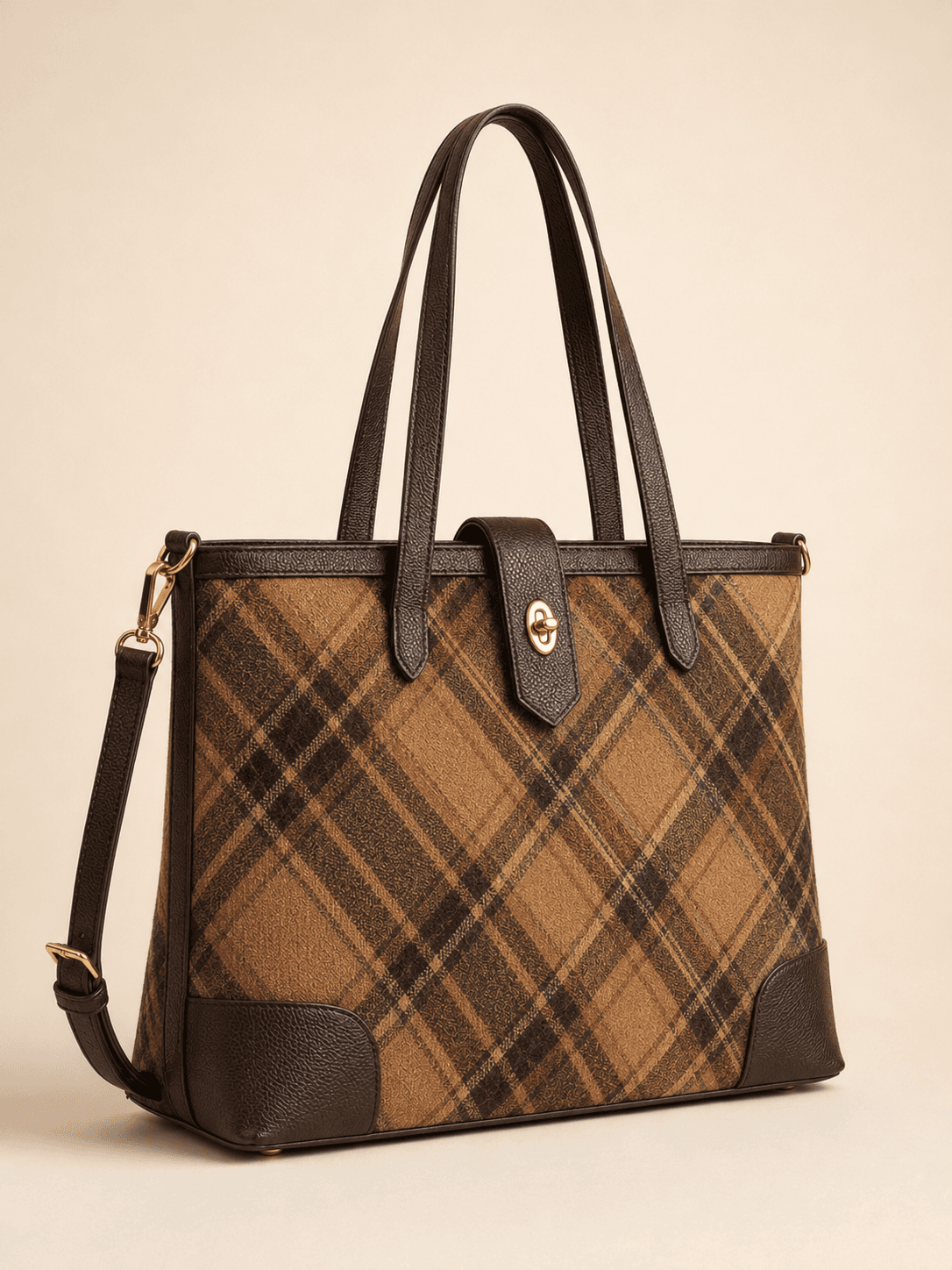
A tote should be designed around what it will actually carry. Novlane starts with the intended load, device fit and opening, then works through handle anchoring, base support, pockets, material and branding. The physical prototype is reviewed while loaded so weak points appear before production preparation.
WHERE IT FITS
Common uses for this product format
Premium retail shoppers
Museum and cultural retail
Travel carry-on programs
Corporate and hospitality gifting
BEFORE THE FIRST SAMPLE
Decisions that change how the product works
Handle anchoring
Distribute pull into reinforced body panels instead of relying on surface stitching.
Load distribution
Set body width, depth and reinforcement around the heaviest intended contents.
Base structure
Choose a soft foldable base or supported platform according to use and shipping volume.
Opening security
Compare open, magnetic, zipper and recessed-zip solutions.
Device fit
Define laptop, document or bottle dimensions before pocket engineering.
Interior organization
Balance access, capacity and seam bulk across pockets, sleeves and dividers.
MATERIAL CHOICES
Choose the material with its limitations in mind
A material name is only a starting point. Structure, wear, finish, documentation and the physical sample determine whether it suits the product.
GRS recycled fabric options
Practical for lightweight utility totes; supplier documentation, coating and seam behavior must be confirmed per project.
Genuine leather
Suitable for premium structure; weight, natural variation, reinforcement and handle load must be evaluated.
Tartan and woven textiles
Supports collection storytelling; pattern direction, fraying, base support and high-load points need control.
CUSTOMIZATION
Details that make the product yours
- Finished dimensions and device fit
- Handle length, width and reinforcement
- Closure and zipper specification
- Base board and protective feet
- Logo, labels and hardware
- Lining, sleeves and pockets
- Artwork or woven-pattern placement
- Fold-flat or structured packing
PRODUCT REFERENCES
References you can cite in the brief
The status beside each SKU shows whether it is a concept, a development reference or an existing sample. It is not a ready-stock label.
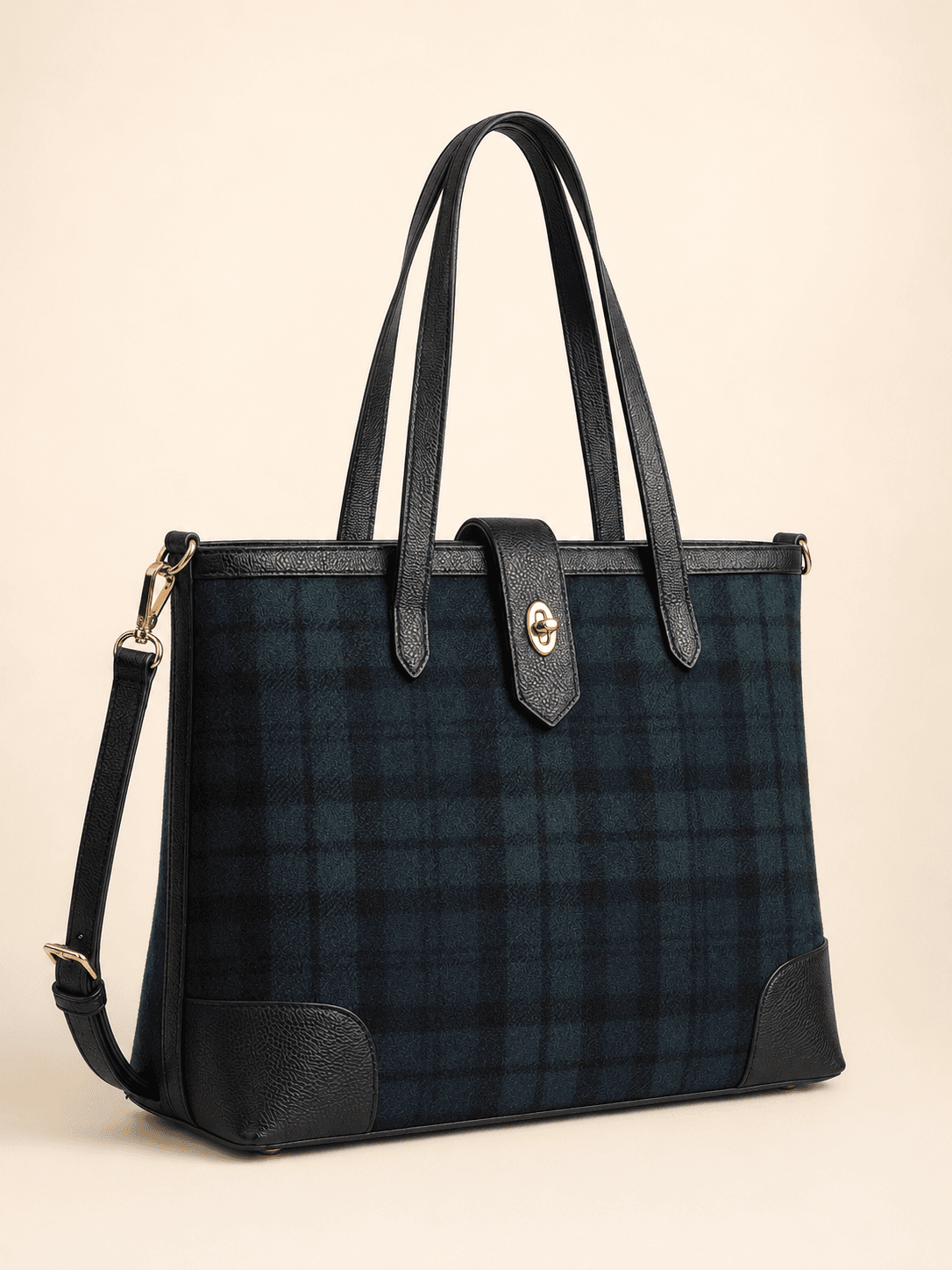
NOV-TB-001 · Concept direction
Tartan Commuter Tote
- Category
- Tote Bags
- Material
- Tartan textile with structured trim
- Visible focus
- Laptop fit, handle load path and rear luggage sleeve.
- Customizable
- Dimensions, material, color, logo, components, lining and packaging.
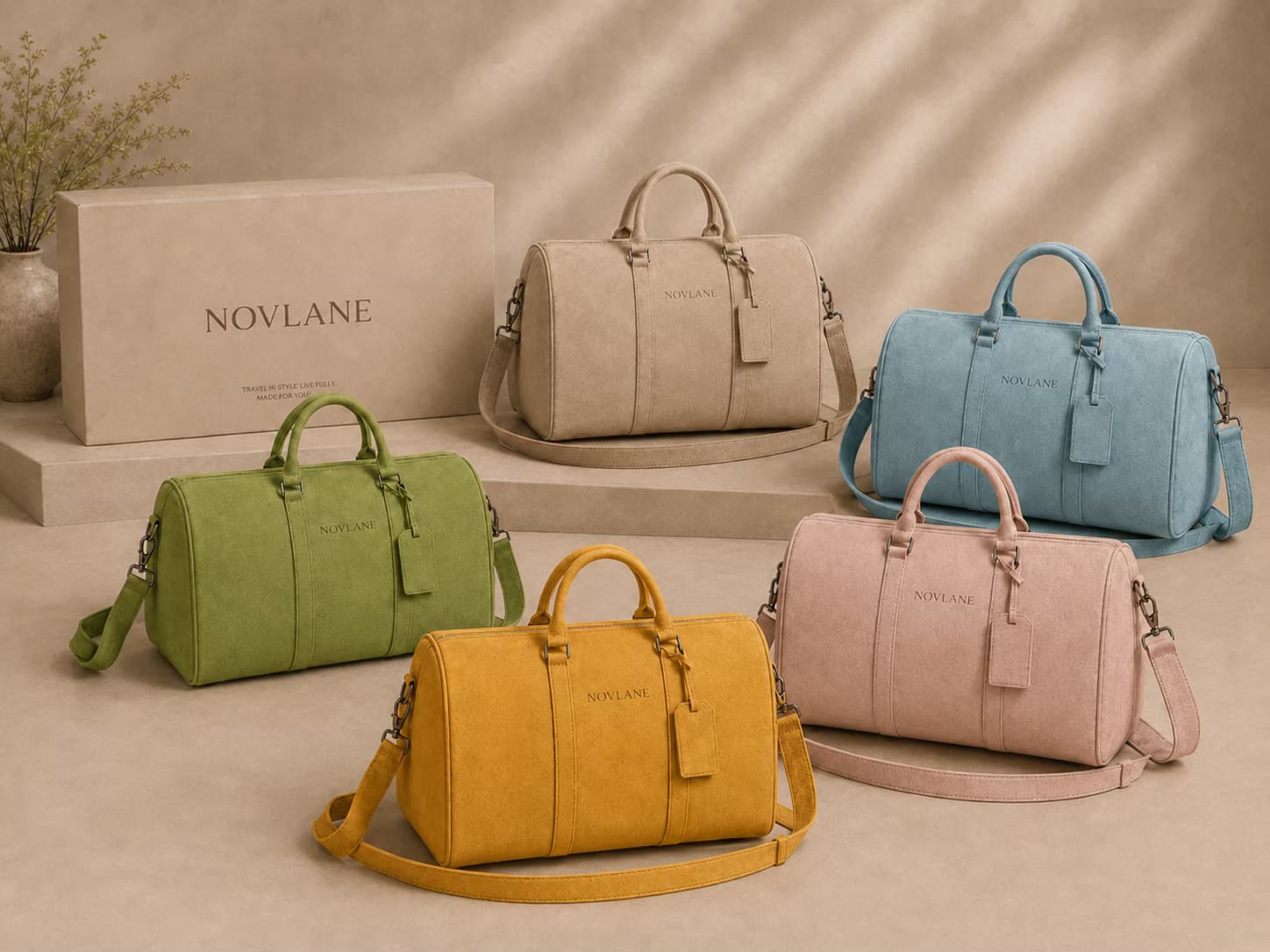
NOV-DB-001 · Development reference
Soft-Touch Weekender
- Category
- Travel & Duffle Bags
- Material
- Alcantara® or qualified microfiber direction
- Visible focus
- Capacity, base reinforcement, handle anchoring and surface protection.
- Customizable
- Dimensions, material, color, logo, components, lining and packaging.
SAMPLING & QC
What we check at each stage
Before sampling
List the heaviest intended load, device dimensions, opening preference, handle drop and packing constraint.
Prototype review
Load the tote and check handle pull, base sag, shoulder clearance, opening access and pocket position.
Pre-production approval
Approve reinforcement map, stitch specification, measurements, material, closures and interior plan.
In-line QC
Inspect handle anchors, base layers, pocket position, zipper alignment and pattern direction.
Final inspection
Check loaded balance, measurements, closure function, surface, seams and hardware.
Packing review
Confirm shape protection or fold sequence without creasing approved surfaces.
COMMERCIAL VARIABLES
What changes MOQ, timing and cost?
There is no useful universal figure without a brief. The product, material, construction and quantity have to be considered together.
MOQ
Material minimums, tote size, color count, closure and packing volume influence the order structure.
Sampling time
Device dimensions, target load, handle drop and interior layout should be clear before pattern work begins.
Production timing
The schedule follows approval of the loaded sample, reinforcement map, material and quantities.
Price
Material usage, handle construction, base support, closures, pockets, logo and packing volume affect the quote.
FROM IDEA TO SAMPLE
How a reference becomes a physical sample
We begin with what you already have: artwork, a reference, a tech pack or an existing sample. The team clarifies the intended use, dimensions, construction, components and branding before preparing the specification. A physical prototype then gives both sides something concrete to test, revise and approve for production checks.
BUYER QUESTIONS
Questions worth settling before sampling
What should be confirmed before sampling a tote?
Confirm target load, device fit, opening, handle drop, base behavior, pockets, material, logo and packing format.
Which materials are suitable for tote bags?
Recycled textiles, canvas, tartan, selected vegan leather and genuine leather can be considered according to load, structure, care and target positioning.
Can the interior be planned around a laptop or bottle?
Yes. Provide the device and bottle dimensions before sampling so sleeves, pockets and loaded balance can be checked together.
How is handle strength reviewed?
Handle geometry, stitch area, internal reinforcement and representative load are reviewed on the sample and controlled in production.
Can a tote include a luggage sleeve?
Yes. Sleeve height, luggage-handle clearance, reinforcement and the loaded balance of the tote should be sampled together.
START WITH WHAT YOU HAVE
Build Your Brief