CUSTOM PRODUCTS · PRIVATE LABEL · OEM / ODM
 Material innovation · Product development
CUSTOM PRODUCTS · PRIVATE LABEL · OEM / ODM
Custom Wallet Manufacturer
Wallet development is a matter of millimetres: card layers, note fit, coin storage and edge construction all compete for space. Novlane builds the layout around the required capacity and selected material, then loads the physical sample to check access, retention, folding and finished thickness.
WHERE IT FITS
Common uses for this product format
Private-label small leather goods
Travel and gift sets
Corporate presentation programs
Boutique capsule ranges
BEFORE THE FIRST SAMPLE
Decisions that change how the product works
Card capacity
Set slot count and card thickness before calculating pocket allowance.
Note and document fit
Use the target market’s currency and documents as dimensional inputs.
Fold behavior
Balance reinforcement, lining and outer material so the wallet closes when loaded.
Coin and zipper layout
Keep zipper tape, gussets and pulls clear of cards and fold lines.
Edge construction
Choose turned, painted or bound edges according to thickness and material response.
RFID option
Define coverage, placement and project-specific validation instead of making a general claim.
MATERIAL CHOICES
Choose the material with its limitations in mind
A material name is only a starting point. Structure, wear, finish, documentation and the physical sample determine whether it suits the product.
Genuine leather
Supports refined edges and natural character; thickness, grain, fold and shade tolerance must be approved.
Apple leather direction
Can support selected small goods; supplier composition, fold response and edge compatibility require documentation and testing.
Printed vegan leather
Useful for coordinated artwork; motif scale, coating, skiving and repeated folding need proof and sample review.
CUSTOMIZATION
Details that make the product yours
- Bifold, trifold or zip-around format
- Card, note and coin layout
- Material thickness and reinforcement
- RFID layer where relevant
- Logo, foil or metal branding
- Thread, lining and zipper
- Edge paint or turned edges
- Gift box, sleeve and coordinated set
PRODUCT REFERENCES
References you can cite in the brief
The status beside each SKU shows whether it is a concept, a development reference or an existing sample. It is not a ready-stock label.
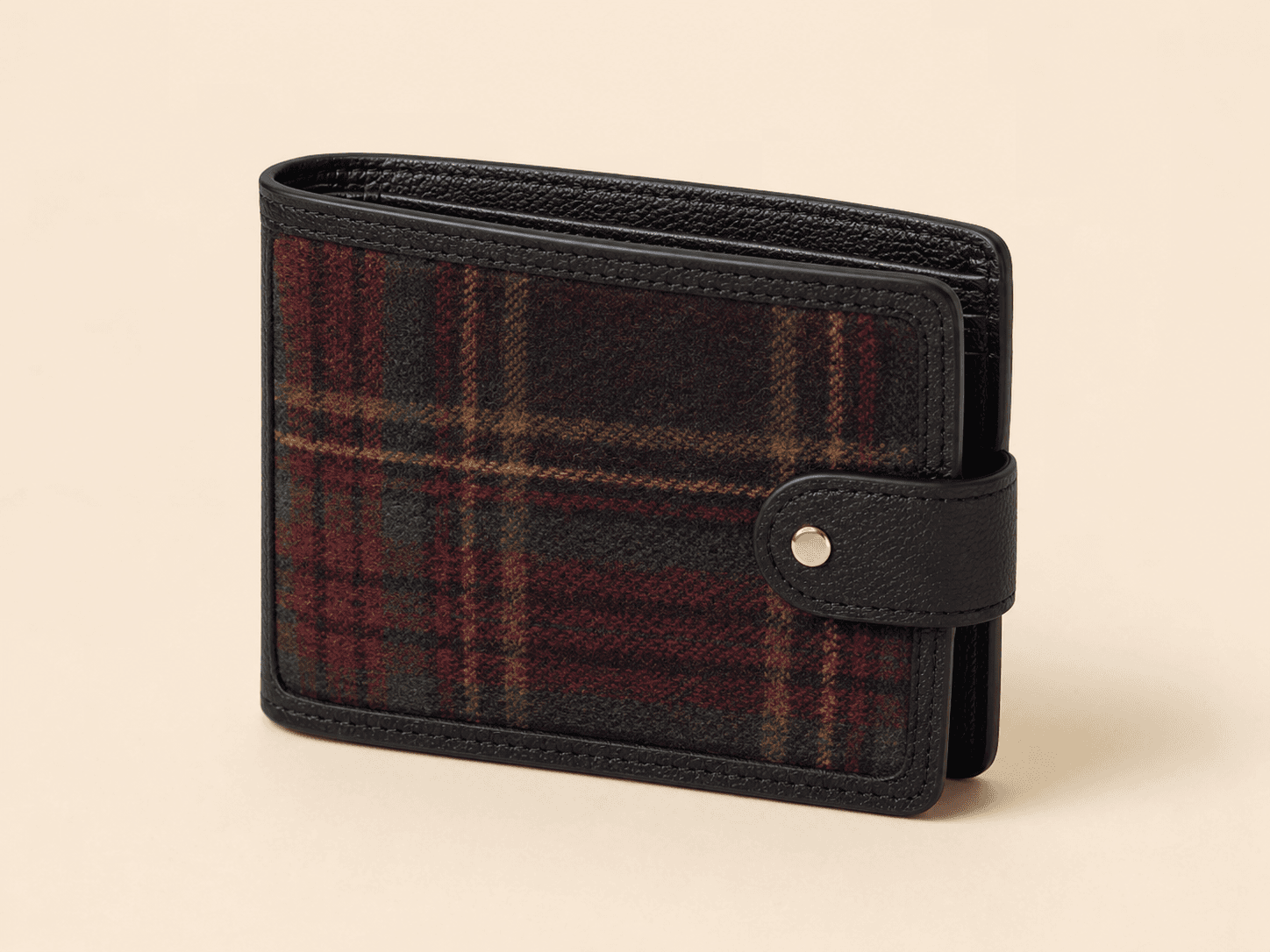
NOV-WB-001 · Concept direction
Compact Tartan Bifold
- Category
- Wallets
- Material
- Tartan textile with edge-painted trim
- Visible focus
- Fold bulk, note fit, card capacity and snap alignment.
- Customizable
- Dimensions, material, color, logo, components, lining and packaging.
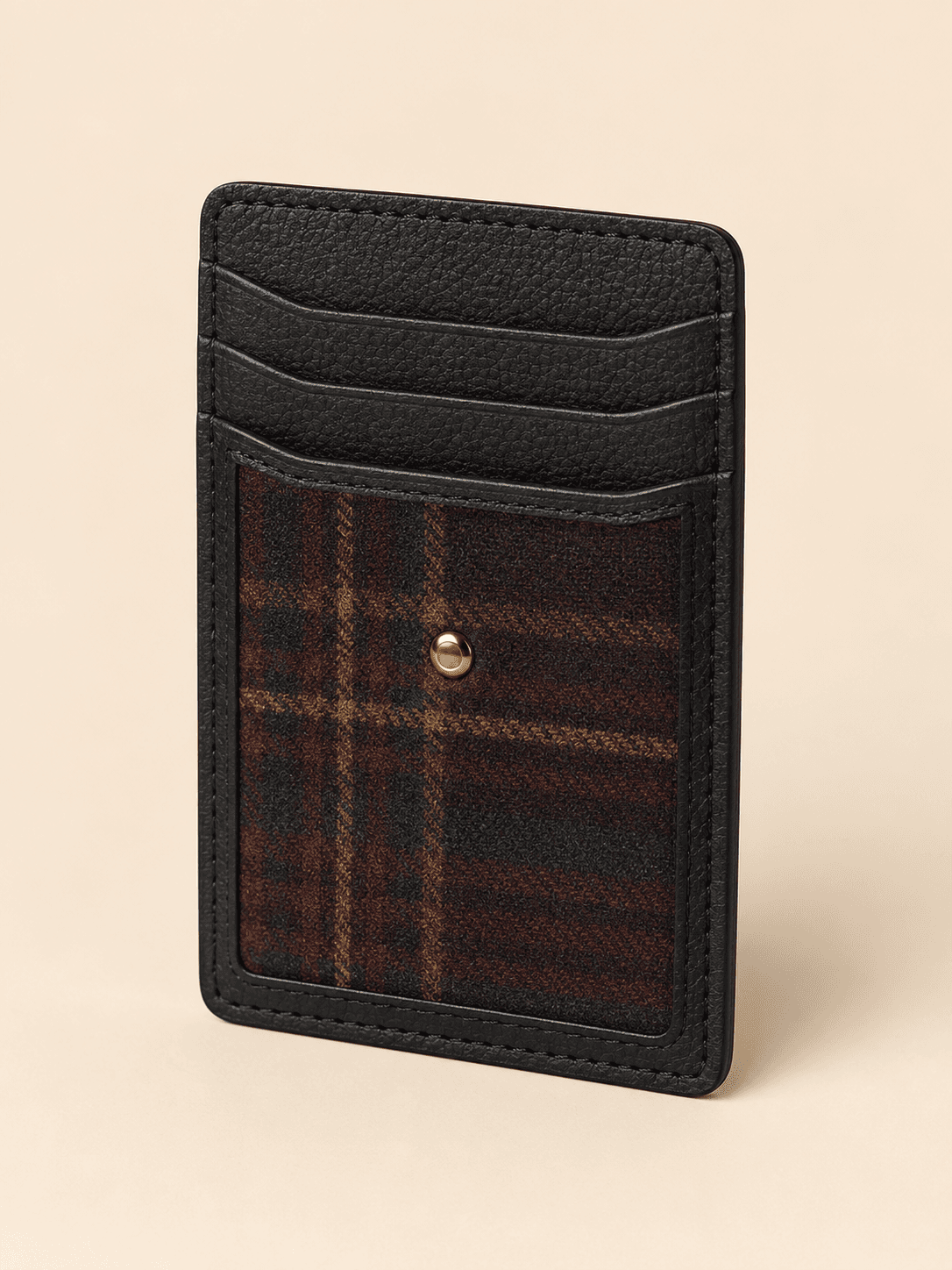
NOV-CH-001 · Concept direction
Slim Tartan Cardholder
- Category
- Cardholders
- Material
- Tartan textile with reinforced slots
- Visible focus
- Slot tension, edge thickness and compact packaging.
- Customizable
- Dimensions, material, color, logo, components, lining and packaging.
SAMPLING & QC
What we check at each stage
Before sampling
Confirm target currency, card count, coin need, closure, material, logo, RFID scope and packaging.
Prototype review
Load all slots and check retention, closing bulk, fold tension, zipper clearance and edge feel.
Pre-production approval
Approve cutting templates, skiving, slot depth, reinforcement, logo, edges and hardware.
In-line QC
Check slot alignment, stitch margin, fold position, zipper path, edge layers and logo location.
Final inspection
Perform card insertion, retention, closure, visual alignment and surface checks.
Packing review
Use inserts only where approved and protect edge paint, hardware and presentation surfaces.
COMMERCIAL VARIABLES
What changes MOQ, timing and cost?
There is no useful universal figure without a brief. The product, material, construction and quantity have to be considered together.
MOQ
Material minimums, colors, internal layout, closures, logo method and gift packaging shape the order.
Sampling time
Card count, note size, coin storage and edge finish should be agreed before the first pattern.
Production timing
The plan follows approval of the loaded wallet, material, colors, components and quantities.
Price
Layer count, material, skiving, slots, coin construction, closure, edge work and packaging affect cost.
FROM IDEA TO SAMPLE
How a reference becomes a physical sample
We begin with what you already have: artwork, a reference, a tech pack or an existing sample. The team clarifies the intended use, dimensions, construction, components and branding before preparing the specification. A physical prototype then gives both sides something concrete to test, revise and approve for production checks.
BUYER QUESTIONS
Questions worth settling before sampling
What should be confirmed before sampling a wallet?
Confirm target currency, card count, coin storage, closure, finished thickness, material, edge method, logo, RFID scope and packaging.
Which materials are suitable for wallets?
Genuine leather, selected vegan leather, printed materials and reinforced textiles can work when thickness, folding and edge performance are validated.
Which branding methods work on a wallet?
Embossing, foil, print and selected metal branding can be reviewed against the material, panel size and finished thickness.
How is card-slot tension checked?
Slots are loaded with representative cards and reviewed for insertion force, retention, stitch position and stretch.
Can RFID protection be added?
An RFID material layer can be considered where relevant; coverage and performance require a project-specific specification and validation.
START WITH WHAT YOU HAVE
Build Your Brief