CUSTOM PRODUCTS · PRIVATE LABEL · OEM / ODM
 Material innovation · Product development
CUSTOM PRODUCTS · PRIVATE LABEL · OEM / ODM
Custom Crossbody Bag Manufacturer
For a crossbody bag, the hardest decisions usually sit in the strap, opening and loaded balance—not the front-view silhouette. Novlane reviews those points with the pockets, hardware and selected material before the first physical sample, then records the agreed construction for production checks in Guangzhou.
WHERE IT FITS
Common uses for this product format
Museum and cultural retail
Compact travel programs
Designer capsule ranges
Coordinated bag-and-wallet collections
BEFORE THE FIRST SAMPLE
Decisions that change how the product works
Access and closure
Set flap, zipper or open-top access around security and one-handed use.
Strap comfort
Confirm adjustable range, width, edge treatment and hardware position on the body.
Loaded shape
Review how phone, wallet and daily contents change the silhouette.
Pocket layout
Place quick-access and secure pockets without creating exterior bulk.
Base and edges
Match reinforcement and edge protection to the material and expected wear.
Hardware contact
Keep rings, hooks and chains from marking the body or creating pressure points.
MATERIAL CHOICES
Choose the material with its limitations in mind
A material name is only a starting point. Structure, wear, finish, documentation and the physical sample determine whether it suits the product.
Digital-printed vegan leather
Useful for artwork-led capsules; coating, fold response and abrasion expectations must be approved on the selected article.
Genuine leather
Supports premium structure and edge work; natural grain, shade and yield tolerances must be defined.
Tartan and woven textiles
Useful for seasonal stories; repeat alignment, fraying control and reinforcement need panel-level review.
CUSTOMIZATION
Details that make the product yours
- Dimensions and gusset depth
- Flap, zipper or magnetic closure
- Adjustable webbing, leather or chain strap
- Logo and hardware finish
- Lining and pocket layout
- Edge paint, piping or turned edges
- Artwork scale and placement
- Private-label packaging
PRODUCT REFERENCES
References you can cite in the brief
The status beside each SKU shows whether it is a concept, a development reference or an existing sample. It is not a ready-stock label.

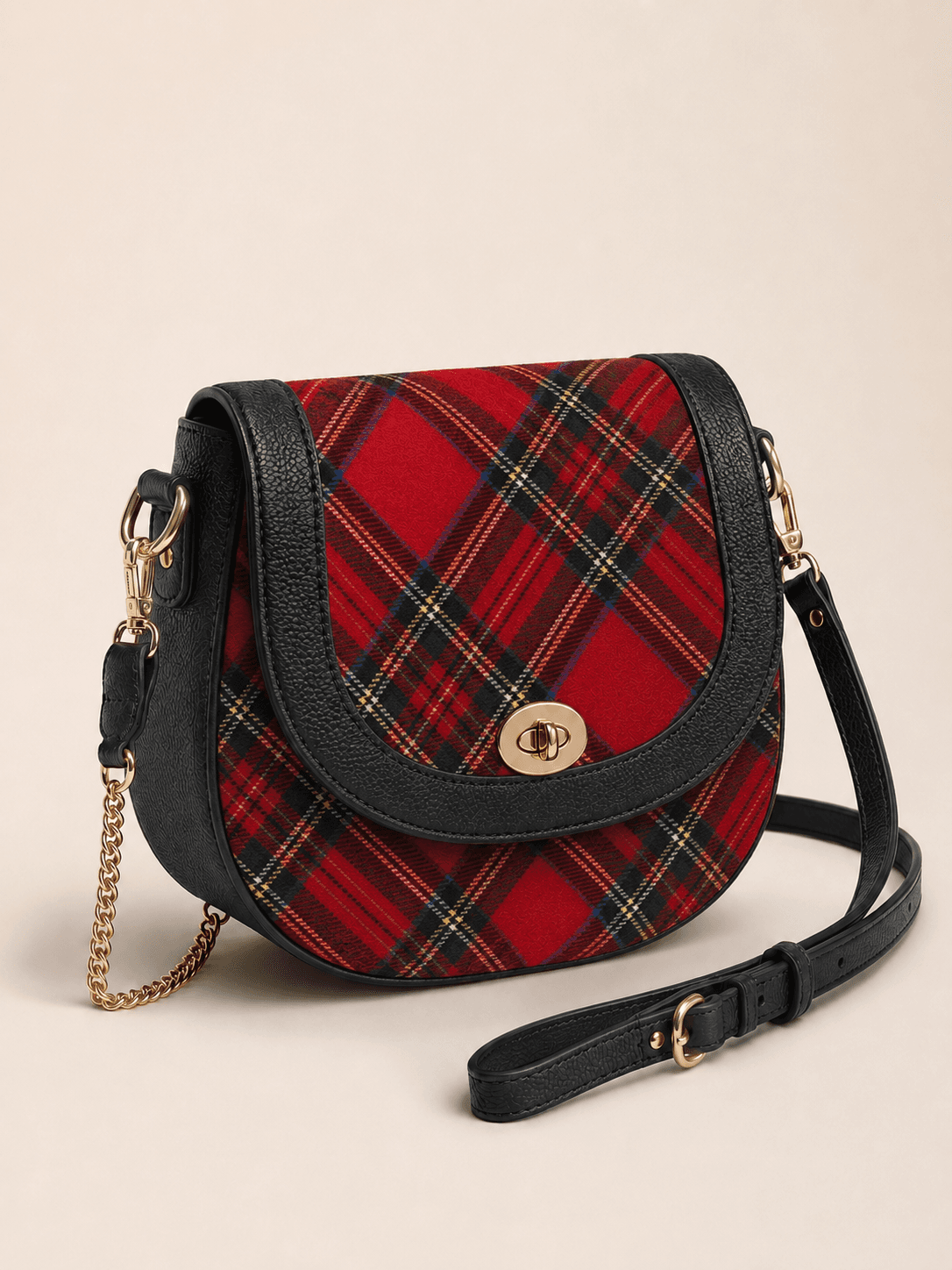
NOV-CB-001 · Concept direction
Tartan Saddle Crossbody
- Category
- Crossbody Bags
- Material
- Tartan textile with contrast trim
- Visible focus
- Flap proportion, turn-lock position and chain-strap comfort.
- Customizable
- Dimensions, material, color, logo, components, lining and packaging.
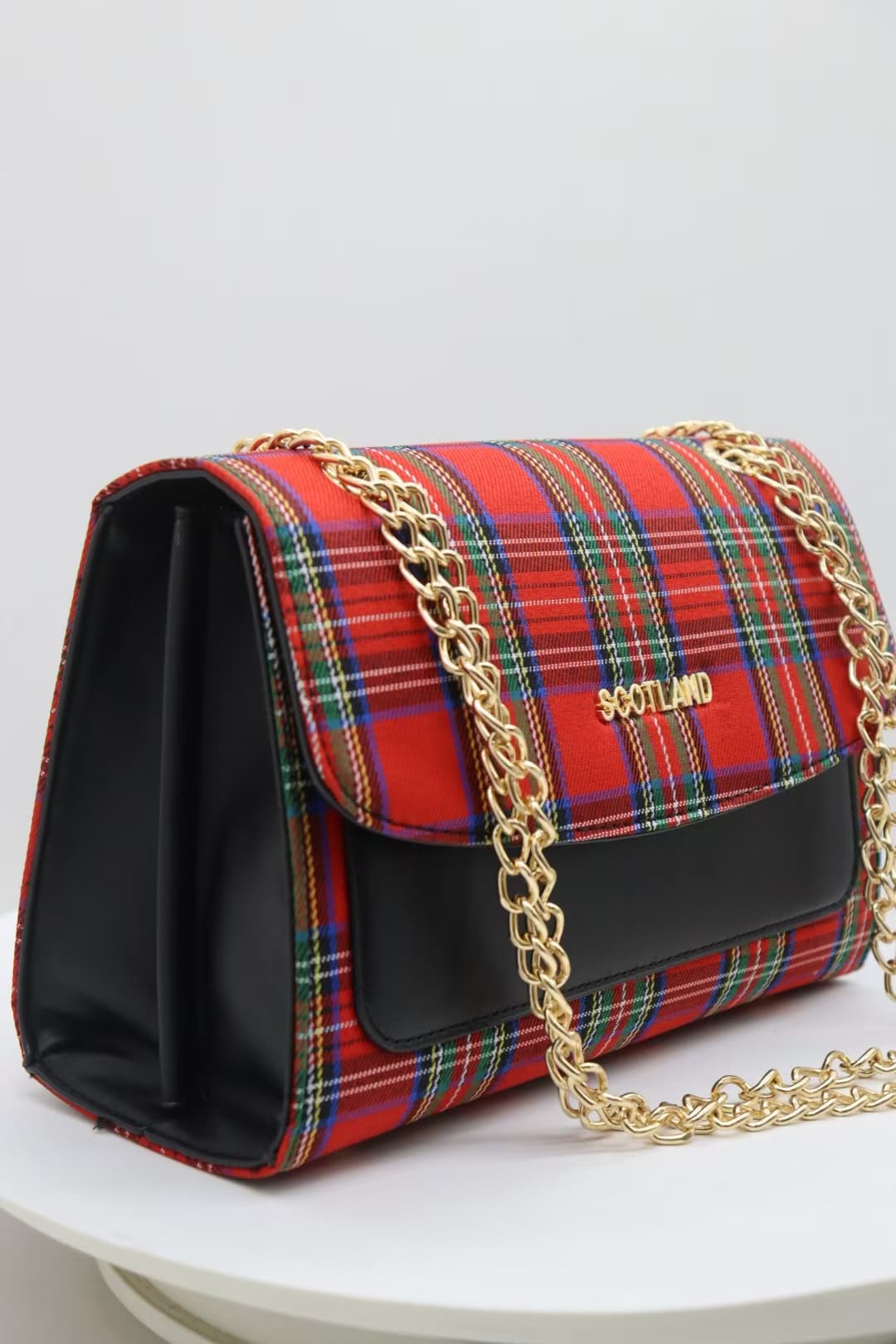
NOV-SB-001 · Development reference
Chain Shoulder Bag
- Category
- Shoulder Bags
- Material
- Tartan textile and vegan-leather trim
- Visible focus
- Chain drop, body balance and flap access.
- Customizable
- Dimensions, material, color, logo, components, lining and packaging.
SAMPLING & QC
What we check at each stage
Before sampling
Confirm target contents, carry position, strap range, closure, artwork and material direction.
Prototype review
Load the sample and check access, strap comfort, balance, pocket reach and hardware contact.
Pre-production approval
Freeze measurements, panel map, strap specification, material article, hardware and workmanship reference.
In-line QC
Check attachment reinforcement, strap assembly, closures, panel direction and critical measurements.
Final inspection
Review function, symmetry, surface condition, edges, hardware and loaded shape.
Packing review
Protect chain or hardware from marking the body and confirm strap placement inside the pack.
COMMERCIAL VARIABLES
What changes MOQ, timing and cost?
There is no useful universal figure without a brief. The product, material, construction and quantity have to be considered together.
MOQ
The selected material, color count, strap hardware and any custom components shape a workable order.
Sampling time
A clear strap range, closure, pocket plan and artwork file reduce avoidable sample revisions.
Production timing
Timing is planned after the material, hardware, approved sample and quantities are settled.
Price
Bag size, material, strap construction, hardware, pockets, branding and packaging are quoted together.
FROM IDEA TO SAMPLE
How a reference becomes a physical sample
We begin with what you already have: artwork, a reference, a tech pack or an existing sample. The team clarifies the intended use, dimensions, construction, components and branding before preparing the specification. A physical prototype then gives both sides something concrete to test, revise and approve for production checks.
BUYER QUESTIONS
Questions worth settling before sampling
What should be confirmed before sampling a crossbody bag?
Confirm target contents, body size, strap range, closure, pocket plan, material, hardware, artwork, logo and packaging.
Which materials are suitable for crossbody bags?
Genuine leather, selected vegan leather, Alcantara or qualified microfiber, and reinforced textiles can work. The final choice depends on structure, wear and target price direction.
Which details can match the rest of a collection?
Logo, hardware finish, lining, artwork and packaging can be coordinated while the crossbody construction is developed for its own use.
How is strap comfort checked?
The prototype is reviewed for adjustable range, width, edge feel, attachment position and balance with representative contents.
Can the same artwork continue into wallets?
Yes. Motif scale and placement should be adapted separately for smaller panels rather than simply reduced.
START WITH WHAT YOU HAVE
Build Your Brief