Name the Contents
A cable pouch, cosmetic pouch and document pouch need different openings, lining and proportions. State what must enter the product and how the user expects to see or retrieve it.
Approximate outer dimensions are useful, but the internal opening and seam construction determine whether the contents actually fit.
Scale the Zipper and Puller
Large hardware can dominate a small body, while a very fine zipper may not suit the material thickness or intended use. Tape, teeth, puller and end construction should be reviewed together.
The prototype should open smoothly around the selected corner shape without forcing or catching the lining.
Match Material and Edge Construction to the Scale
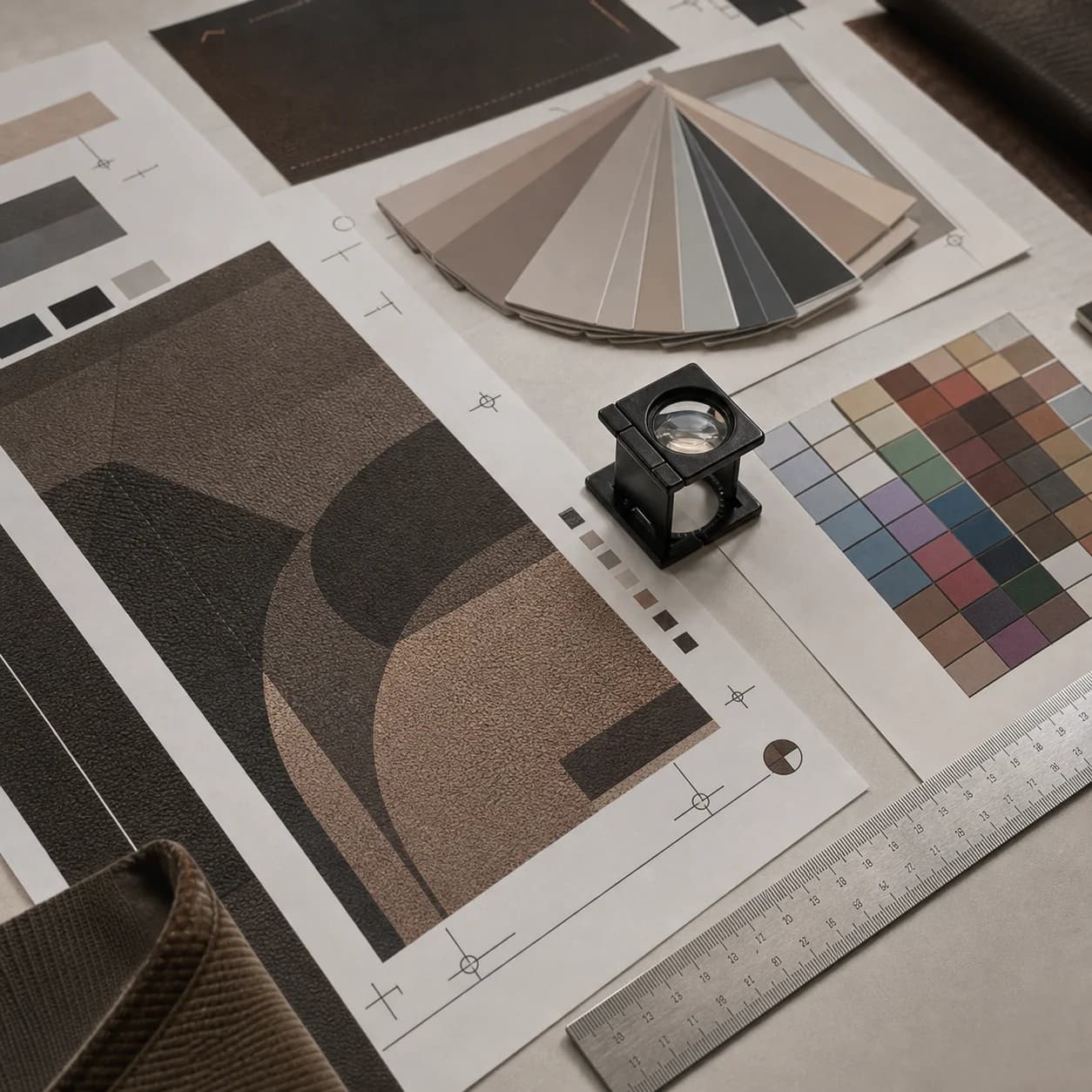
Printed vegan leather, genuine leather, microfiber and textile create different seam and edge options. Thick material or tight curves may add bulk inside a small product.
Review whether edges are turned, painted, bound or concealed, and confirm the result on the selected material.
Define the Collection Role
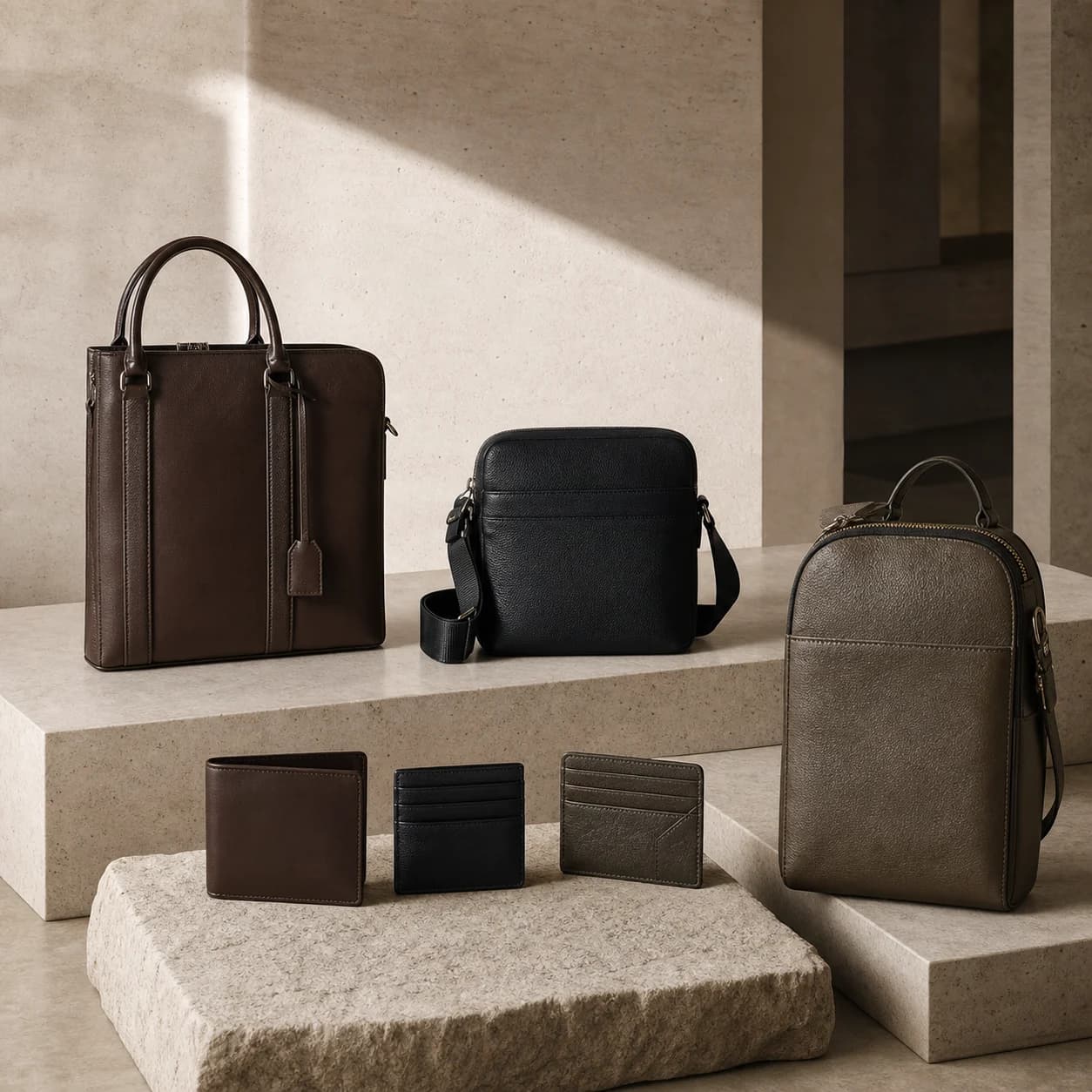
A pouch can repeat the hero material, create an accessible entry product, organise a larger bag or complete a gift set. That role influences branding, packaging and production planning.
Do not assume leftover material can automatically be reused. Yield, cutting direction, colour consistency and order planning require project review.
Frequently asked questions
Is a pouch always cheaper to develop than a bag?
Not necessarily. Cost depends on material, zipper, lining, logo, packaging, quantity and construction rather than size alone.
Can the same artwork be used on a tote and pouch?
Yes, but repeat scale and placement usually need adjustment for the smaller panels.
Continue the development review with Alcantara, Everyday Zip Pouch, Material Lane Collection, Start Your Project.