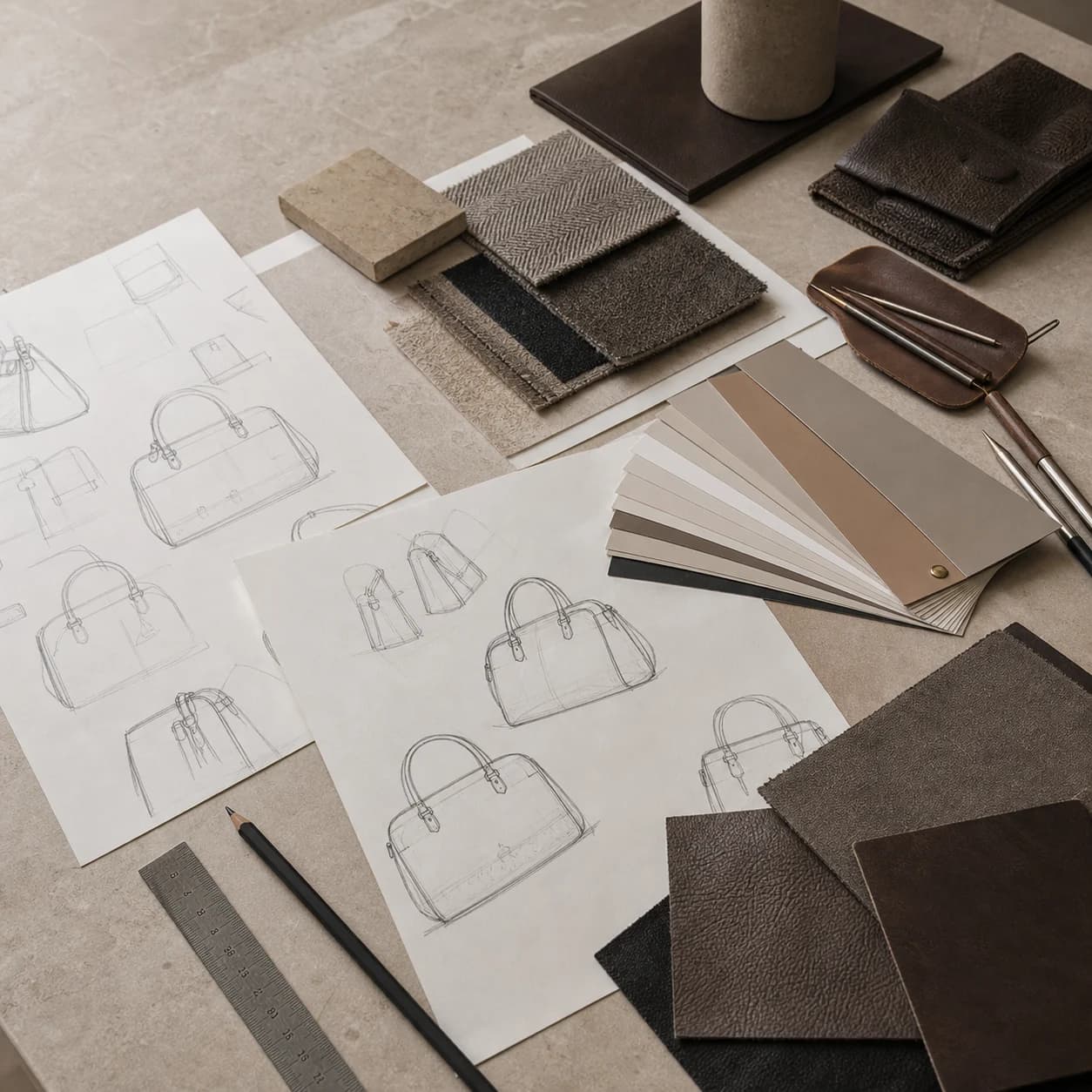
A printed tote is successful when the artwork still feels intentional after the material is cut, folded and stitched. The development task is not simply to place a graphic on a bag. It is to decide where the repeat begins, which panels carry the strongest visual information and how the construction protects the printed surface.
This Material Lane direction is designed for brands building a recognisable visual language across a lead tote and smaller matching accessories. The final silhouette, dimensions and components remain project-specific and are confirmed through sampling.
02 / REAL USE SCENARIO
A weekday tote that still carries the brand story
The intended scenario moves from a morning commute to a studio meeting, a retail appointment and light weekend use. The brief therefore needs comfortable carrying, an opening that suits the market, practical internal organisation and artwork placement that still reads when the tote is being carried.
03 / MATERIAL REASON
Why the material decision matters.
Digital-printed vegan leather can support original artwork and coordinated product families. The selected base, coating, thickness and print method must be reviewed together because they affect colour, fold behaviour, abrasion and edge finishing.
Digital-printed vegan leather selected by physical swatch
Project-specific lining
Reinforcement appropriate to the intended load
Hardware and edge finish confirmed on the prototype
04 / DEVELOPMENT CAPABILITY
What the project needs to resolve.
Artwork resolution, repeat and ownership review
Panel-by-panel print placement
Handle, opening and interior organisation
Logo, lining, trim and packaging coordination
Physical print proof and prototype approval
05 / MANUFACTURABILITY
Questions a rendering cannot answer.
These decisions are reviewed before the product is described as production-ready.
Avoid placing critical artwork directly across seams, tight folds or high-abrasion corners without a physical test.
Confirm whether the tote should be soft, semi-structured or reinforced before selecting thickness and backing.
Treat screen colour as a communication reference; approve a physical proof under relevant lighting.
06 / EXISTING DEVELOPMENT EVIDENCE
Real process imagery, used with accurate context.
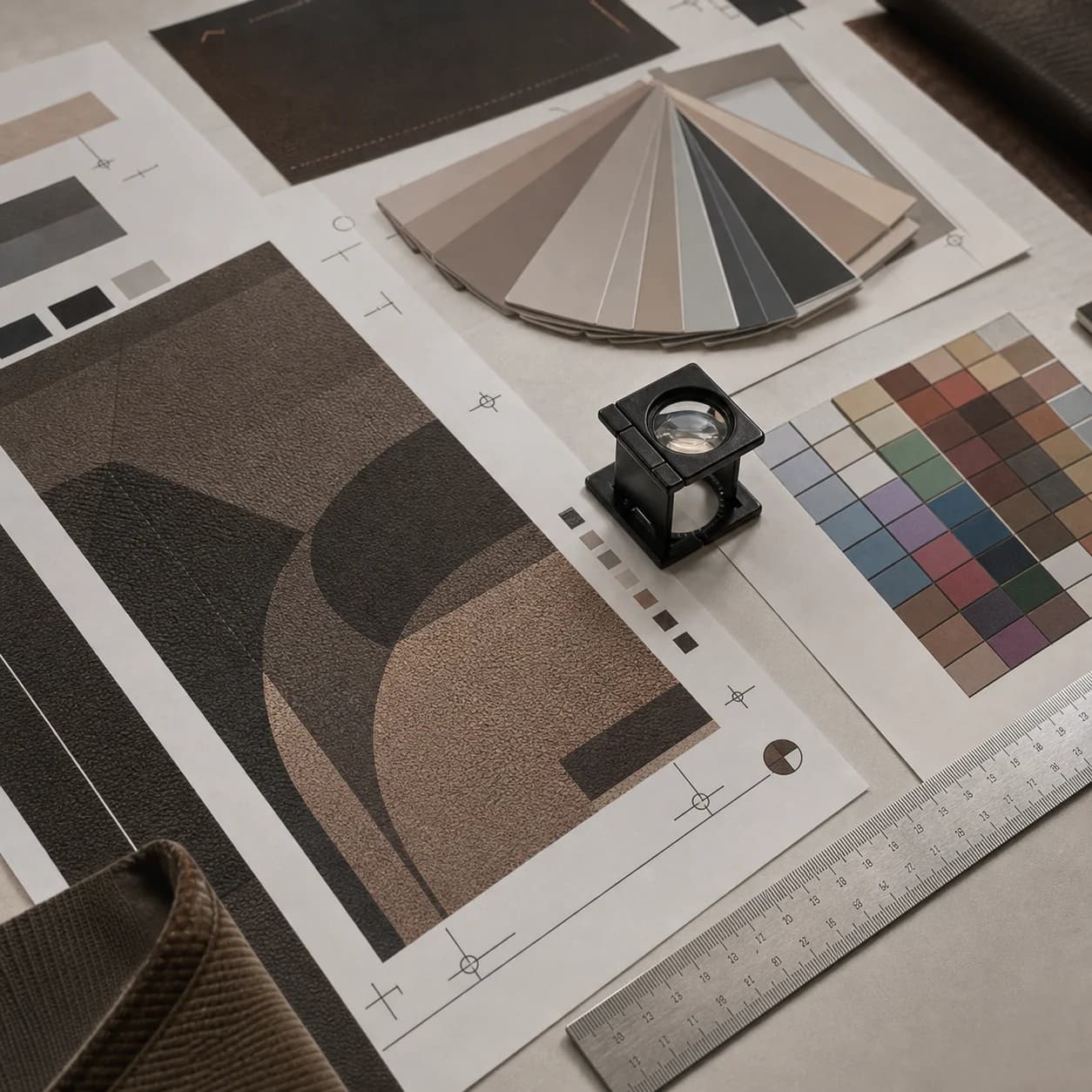
These existing NOVLANE images explain development stages. Captions state when an image is not the exact finished product described on this page.
Existing NOVLANE process image: artwork review. It is not a photograph of the final tote.Existing NOVLANE process image: print proofing before prototype approval.
07 / CONTINUE THE RESEARCH
Connect product, material and development knowledge.
It may be possible, but placement should be reviewed panel by panel. Seams, folds, handles and edge construction can interrupt important artwork.
Can NOVLANE match colours from a screen?
A digital reference can begin the discussion, but production colour should be approved through a physical print proof or material sample.
Are dimensions, MOQ and lead time fixed for this direction?
No. They depend on the final structure, selected material, artwork, colour count, components and approval cycle.
Manufacturing & compliance support
NOVLANE’s manufacturing and compliance support is provided through Guangzhou Cappuccino Leather Handbag Co., Ltd. Relevant documentation may be reviewed for qualified projects only where it applies to the selected material, submitted sample, production site or registered legal entity.
START YOUR PROJECT
Bring the use case, material direction and visual reference into one development brief.