CUSTOM PRODUCTS · PRIVATE LABEL · OEM / ODM
 Material innovation · Product development
CUSTOM PRODUCTS · PRIVATE LABEL · OEM / ODM
Custom Cardholder Manufacturer
The quality of a cardholder is felt in its slot tension and edge thickness. Novlane works back from the required card count, then adjusts cutting, skiving, reinforcement, stitch position and logo placement for the chosen material. The loaded sample is checked for retention without unnecessary bulk.
WHERE IT FITS
Common uses for this product format
Matching handbag add-ons
Corporate and museum gifting
Travel accessory sets
Compact premium packaging programs
BEFORE THE FIRST SAMPLE
Decisions that change how the product works
Slot tension
Balance pocket allowance, material stretch and reinforcement for secure access.
Finished thickness
Control overlapping layers, lining and edge build-up.
Card exposure
Set thumb access and visible card height without weakening retention.
Stitch margin
Protect slot edges while maintaining a clean, consistent visual line.
Center compartment
Define whether notes or extra cards fit without distorting outer slots.
Edge finish
Match skiving and edge paint or turned construction to the selected article.
MATERIAL CHOICES
Choose the material with its limitations in mind
A material name is only a starting point. Structure, wear, finish, documentation and the physical sample determine whether it suits the product.
Genuine leather
Suitable for thin layered construction; leather thickness, stretch and natural variation require control.
Alcantara® or qualified microfiber
Offers soft touch; reinforcement, edge method, nap and high-contact areas must be reviewed.
Printed vegan leather
Carries artwork across a small surface; motif scale, slot folds, coating and edge response need sampling.
CUSTOMIZATION
Details that make the product yours
- Slot count and orientation
- Center pocket and note fit
- Material and reinforcement
- Logo, foil or embossing
- Stitch color and margin
- Edge paint or turned finish
- RFID layer where relevant
- Sleeve, box or gift-set packaging
PRODUCT REFERENCES
References you can cite in the brief
The status beside each SKU shows whether it is a concept, a development reference or an existing sample. It is not a ready-stock label.
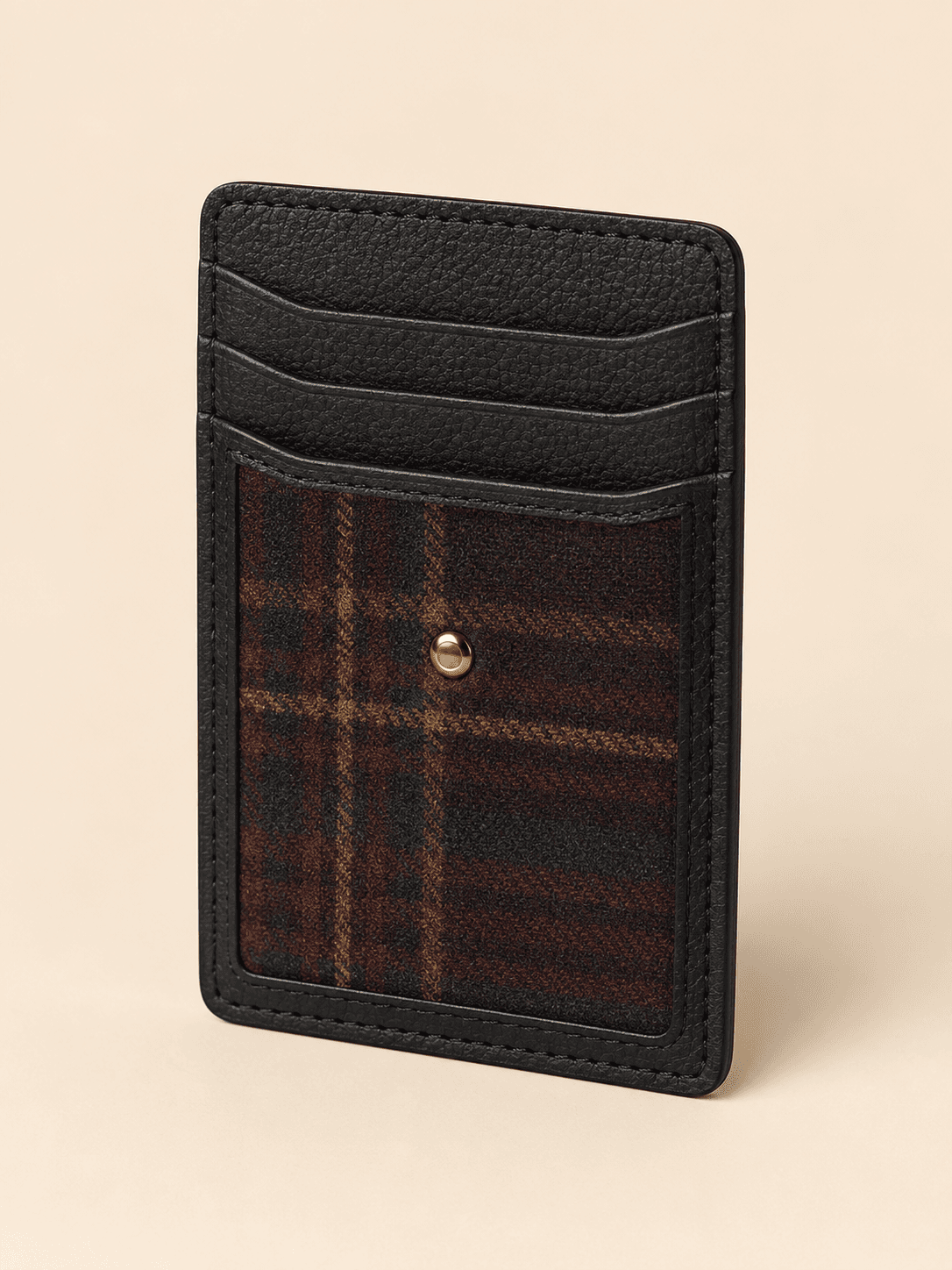
NOV-CH-001 · Concept direction
Slim Tartan Cardholder
- Category
- Cardholders
- Material
- Tartan textile with reinforced slots
- Visible focus
- Slot tension, edge thickness and compact packaging.
- Customizable
- Dimensions, material, color, logo, components, lining and packaging.
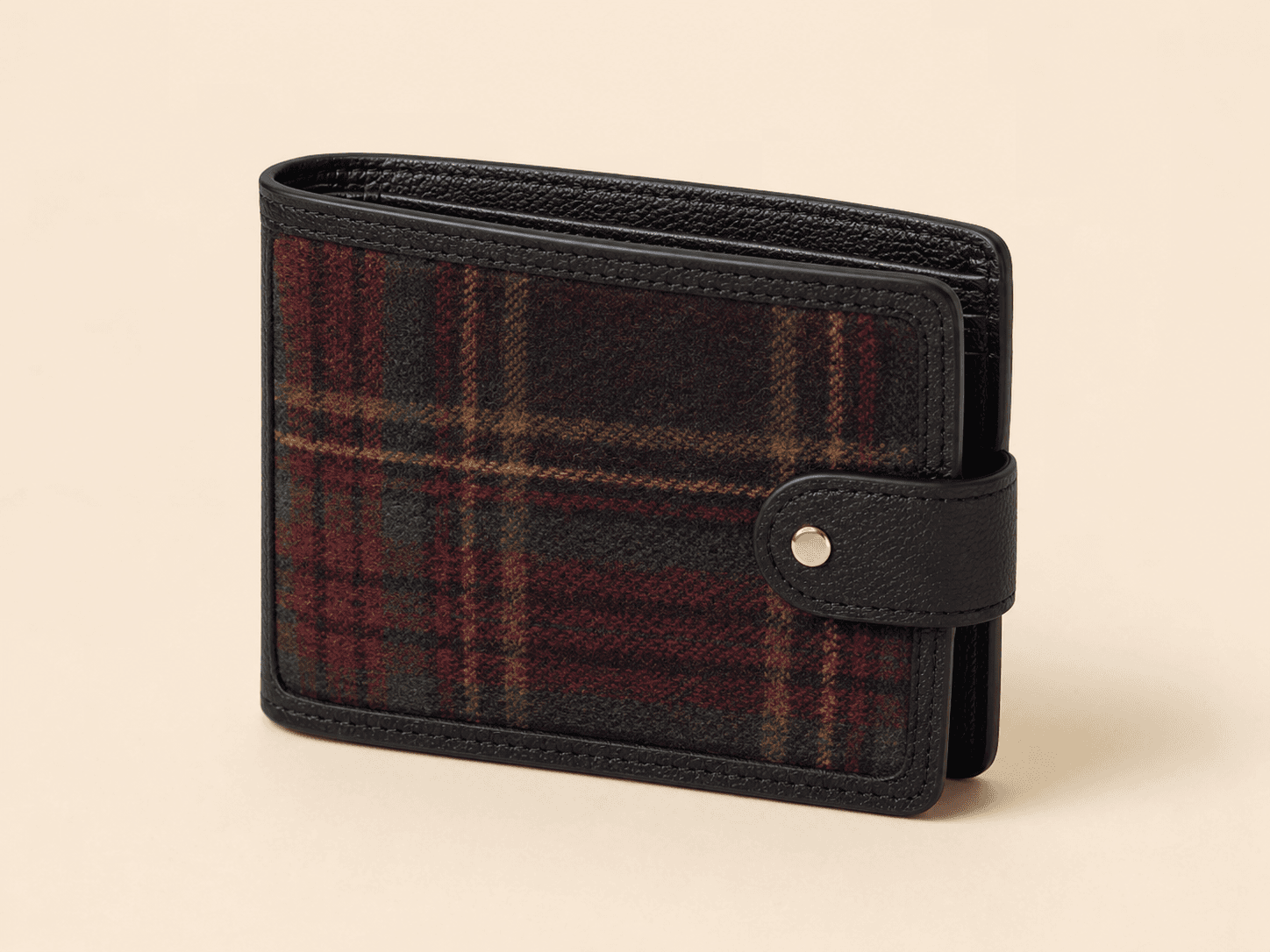
NOV-WB-001 · Concept direction
Compact Tartan Bifold
- Category
- Wallets
- Material
- Tartan textile with edge-painted trim
- Visible focus
- Fold bulk, note fit, card capacity and snap alignment.
- Customizable
- Dimensions, material, color, logo, components, lining and packaging.
SAMPLING & QC
What we check at each stage
Before sampling
Confirm card count, orientation, center-pocket use, target thickness, material, logo and packaging.
Prototype review
Load every slot repeatedly and check insertion force, retention, edge feel and deformation.
Pre-production approval
Freeze templates, pocket allowance, skiving, reinforcement, stitches, logo and edges.
In-line QC
Check slot depth, symmetry, stitch margin, layer alignment and edge preparation.
Final inspection
Test card retention, pocket access, dimensions, edges, logo and surface consistency.
Packing review
Confirm card inserts, protective tissue and retail presentation do not stretch slots.
COMMERCIAL VARIABLES
What changes MOQ, timing and cost?
There is no useful universal figure without a brief. The product, material, construction and quantity have to be considered together.
MOQ
Material minimums, layer count, colors, logo method, edge finish and retail packaging influence the order.
Sampling time
Capacity, card orientation, center pocket and target thickness should be decided at the start.
Production timing
Production is planned after slot tension, material, edges, branding and quantities are approved.
Price
Material, number of layers, skiving, reinforcement, edge work, logo and packaging determine the quote.
FROM IDEA TO SAMPLE
How a reference becomes a physical sample
We begin with what you already have: artwork, a reference, a tech pack or an existing sample. The team clarifies the intended use, dimensions, construction, components and branding before preparing the specification. A physical prototype then gives both sides something concrete to test, revise and approve for production checks.
BUYER QUESTIONS
Questions worth settling before sampling
What should be confirmed before sampling a cardholder?
Confirm card count, orientation, center pocket, target thickness, material, reinforcement, logo, edge finish and packaging.
Which materials are suitable for cardholders?
Thin genuine leather, selected vegan leather, microfiber and reinforced textiles can work after slot tension and edge response are sampled.
Can logo, stitching, edge paint and packaging be customized?
Yes. These details are reviewed as one compact visual and construction system.
How many cards can a custom cardholder hold?
Capacity is defined by the project. Slot count, material thickness and intended card loading should be approved on the physical sample.
Can cardholders match a handbag collection?
Yes. Material, print scale, trim color, logo and packaging can be coordinated while construction is adapted to the smaller format.
START WITH WHAT YOU HAVE
Build Your Brief