Give Each Product a Role in the Range
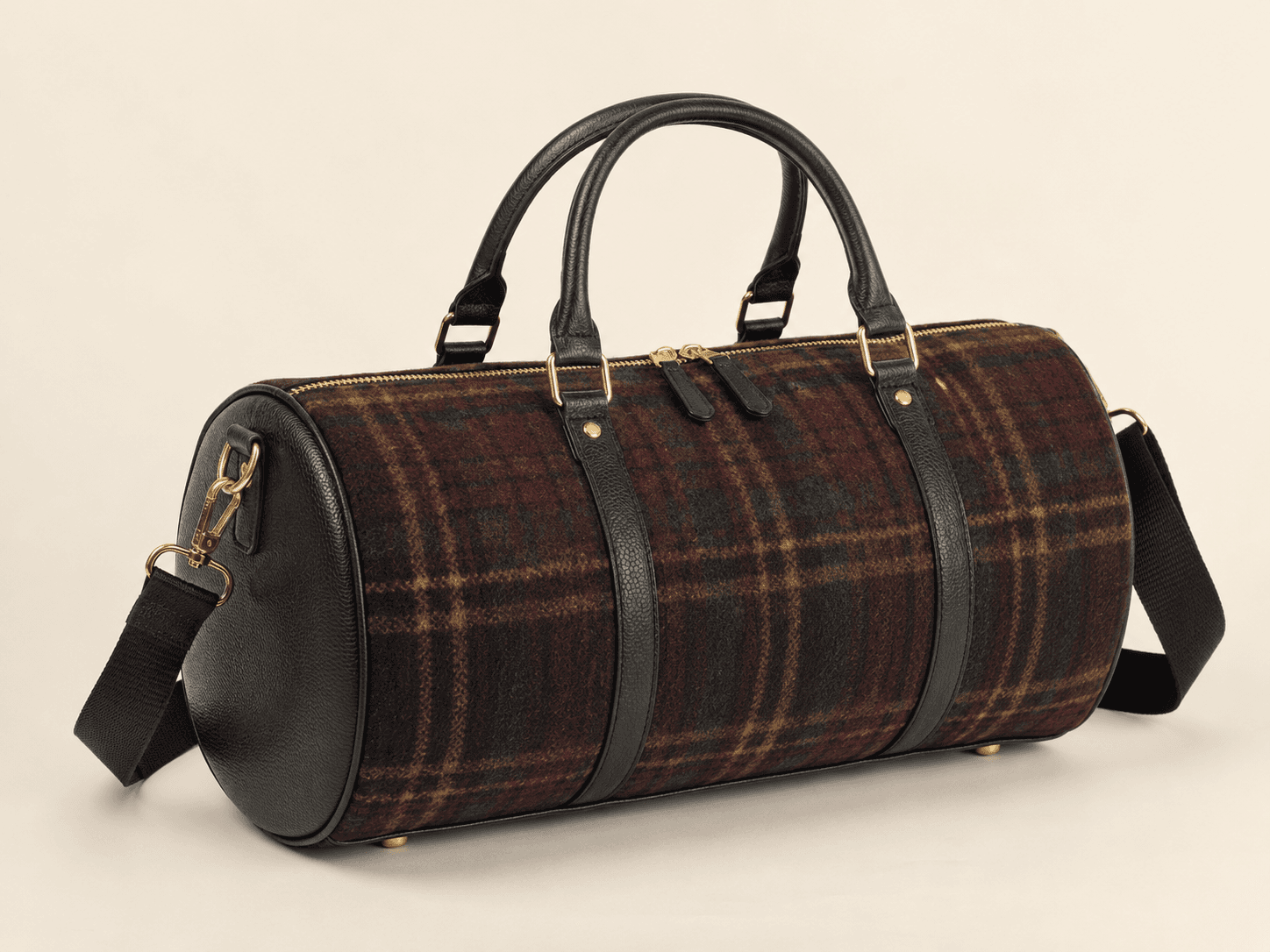
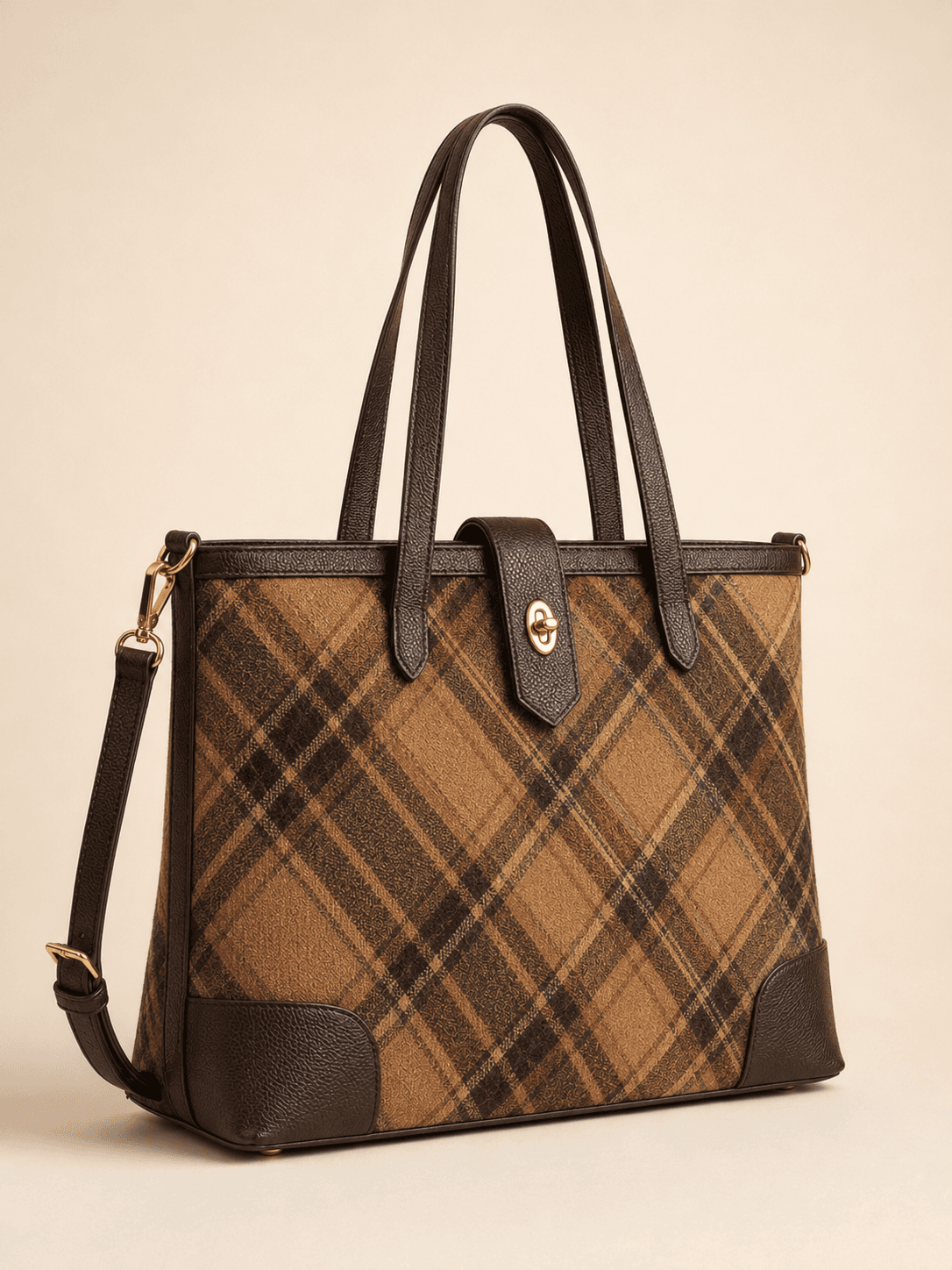
Start by deciding which products are core, which support them and which are giftable additions. A tote or weekend bag can lead the visual story. A saddle crossbody may carry it into an everyday shape. A bifold wallet and slim cardholder can provide compact companions without repeating every detail.
This hierarchy helps the buyer decide where development effort matters most. It also prevents a small test range from becoming overloaded with near-identical colours and hardware variants.
Keep the Recognisable Elements Consistent
The shared elements usually include the tartan colour family, trim tone, metal finish, logo hierarchy, lining direction and packaging language. Consistency does not require every zip pull or pocket to be identical. It means the choices appear to belong to one design system.
A written collection sheet should identify the approved tartan reference, trim reference and hardware finish. If a product uses an exception, record why. This is particularly useful when bags and small goods are handled by different pattern or assembly teams.
Adapt Scale and Construction to Product Size
How should tartan scale change between a tote and a cardholder? Judge the visible panel, not only the finished product dimensions. A tote may show several complete repeats, while a cardholder face may be smaller than one repeat. A reduced version of the same artwork can preserve more of the colour rhythm on small goods.
Construction changes too. A bag may need reinforced handles, a structured base and several lining panels. A wallet needs controlled fold thickness, slot tension and clean edges. These technical differences should guide material weight and backing rather than being forced into one specification.
Plan Pattern Direction and Matching Priorities
Checks make cutting decisions visible. Front panels, flaps and large pockets may justify deliberate alignment, while a narrow gusset or curved seam may not. Trying to match every line can increase material use without producing a meaningful visual gain.
Mark the priority surfaces on the pattern map. At seams, allow for turn-of-cloth, seam allowance and the way a filled bag changes shape. A sample can show whether a theoretical match still reads correctly once the product is assembled.
Placement record
- Front-panel centre line
- Flap and pocket direction
- Paired side panels
- Gusset treatment
- Cutting tolerance
- Approved sample photographs
Use Hardware, Binding and Lining to Control Visual Temperature
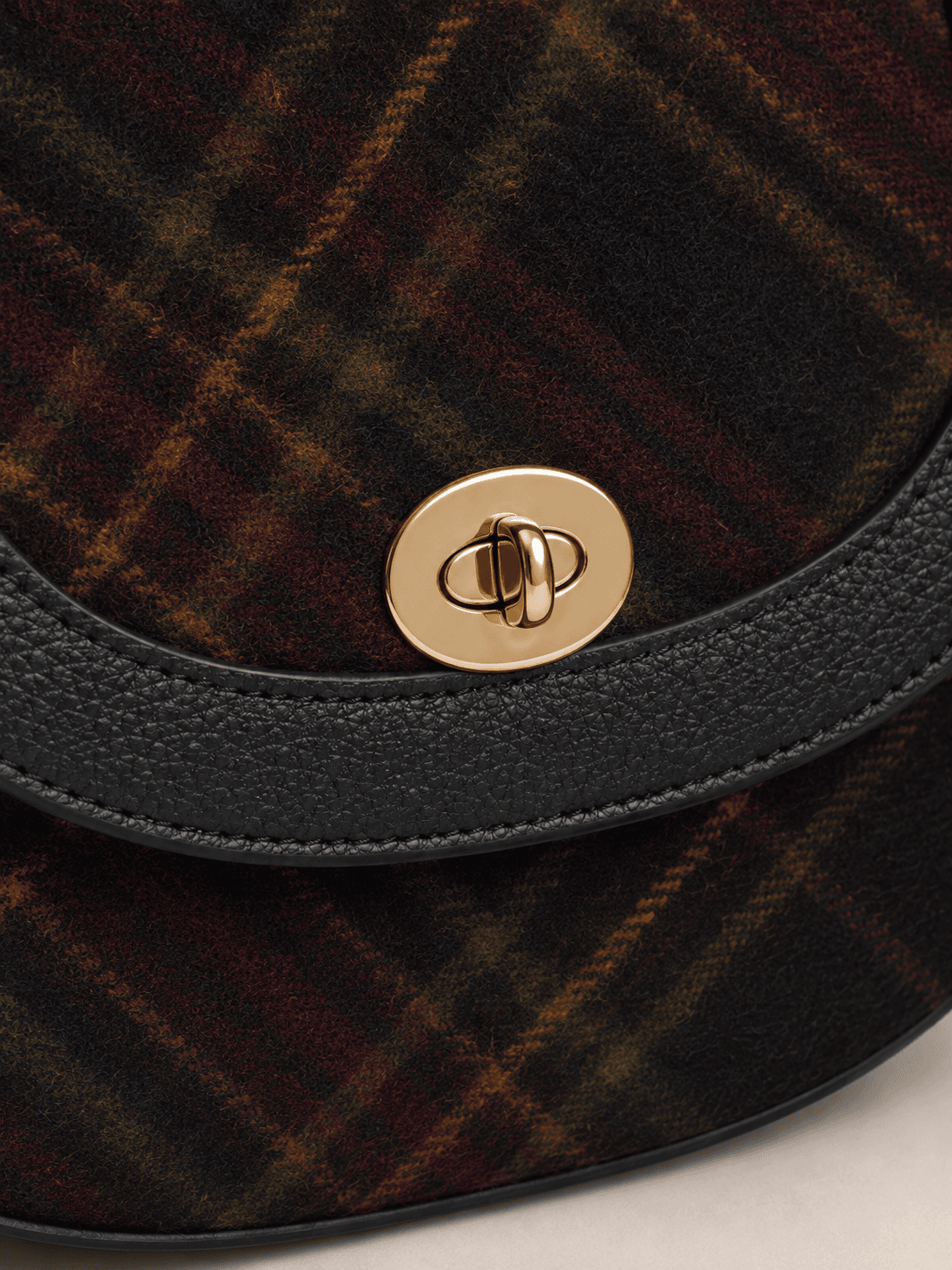
Metal colour changes the mood of the same textile. Bright gold can warm burgundy and camel checks, while silver may make the range feel cooler and more graphic. Gunmetal or black hardware can reduce contrast. The choice should be viewed beside the actual textile and trim, not selected from a screen in isolation.
Binding, edge colour and lining perform a similar job. They can repeat a minor stripe, calm a strong check or create a deliberate contrast. Packaging should follow the approved collection palette without assuming an exact material match is always available.
Reduce Unnecessary Colours in a Small Test Range
For a small initial programme, use one approved tartan and one trim-hardware system across the core styles. If a second colour is needed, assign it to a clear role rather than producing every style in both colours. This keeps the sample and supplier matrix easier to control.
Colour reduction does not guarantee a particular MOQ or price. It simply removes avoidable variables. The actual commercial terms still depend on textile sourcing, product construction, component minimums, packaging and the quantity split by style.
Use One Approved Tartan With Product-Specific Records
Can bags and wallets use the same approved tartan? They can use the same artwork family and, when suitable, the same textile. Each style still needs a record of scale, panel direction, material backing and placement. A shared approval is the starting point, not a substitute for style-level confirmation.
When the range reaches pre-production preparation, bring those records together in a collection matrix. The team can then check that exceptions are intentional and that names, file versions and physical references remain consistent.
Continue the development review with Tartan Fabrics, Tartan Bags, Tartan Wallets & Cardholders, Tartan Collection, Start an RFQ.