Why Tartan Works Across UK Lifestyle, Gift and Boutique Retail
Tartan is familiar in the UK, but familiarity alone does not make a collection commercially coherent. A colour story might feel warm and traditional, sharp and urban, or quietly neutral. The product shapes, trim colour and metal finish should support that choice rather than rely on the check to do all the work.
For lifestyle and gift buyers, one pattern can connect products at different price and use points. A weekend bag may provide the visual anchor, while a wallet or cardholder makes the same direction available in a compact format. These are development roles, not assumptions about stock, price or sales volume.
Move From a Brand Reference to Usable Tartan Artwork
A buyer may begin with an owned artwork file, a physical textile reference or a colour mood. The factory team first needs to establish who controls the artwork, whether the repeat is complete and which colours are fixed. A photograph of a check can guide a discussion, but it is rarely enough to control scale and colour in production.
Supply vector artwork where possible, or a high-resolution repeat at a stated physical size. Name the intended direction of the warp and weft, identify any stripe that must remain central, and provide a physical colour reference when colour is critical. Royal Stewart Red and Black Watch can be discussed as colour concepts, but that wording does not establish clan, regimental, official or licensed affiliation.
Useful artwork inputs
- Customer-owned repeat artwork
- Repeat dimensions
- Physical colour reference
- Preferred panel direction
- Logo files
- Commercial-use confirmation
Approve the Lead Bag Before Extending the Range
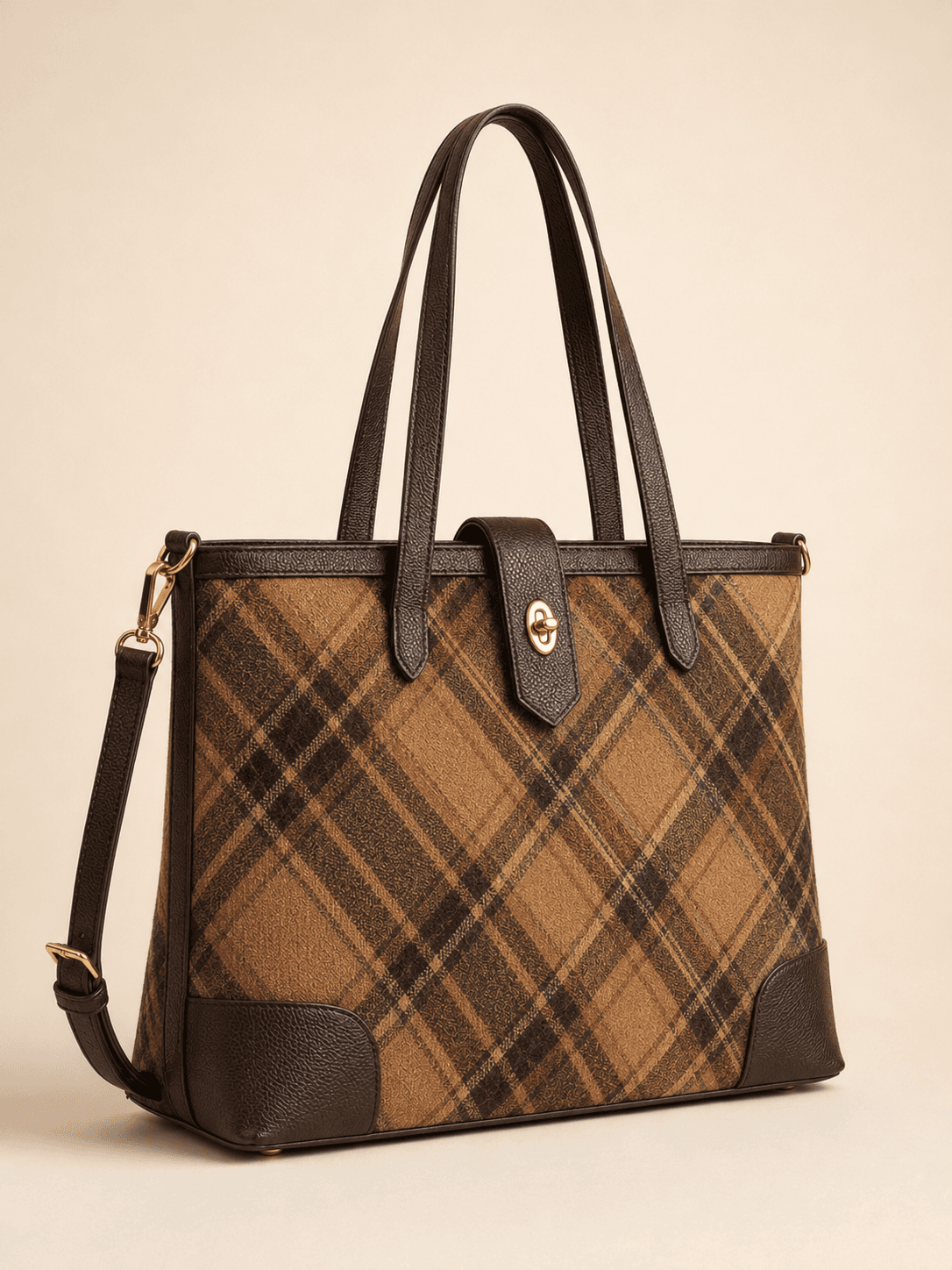
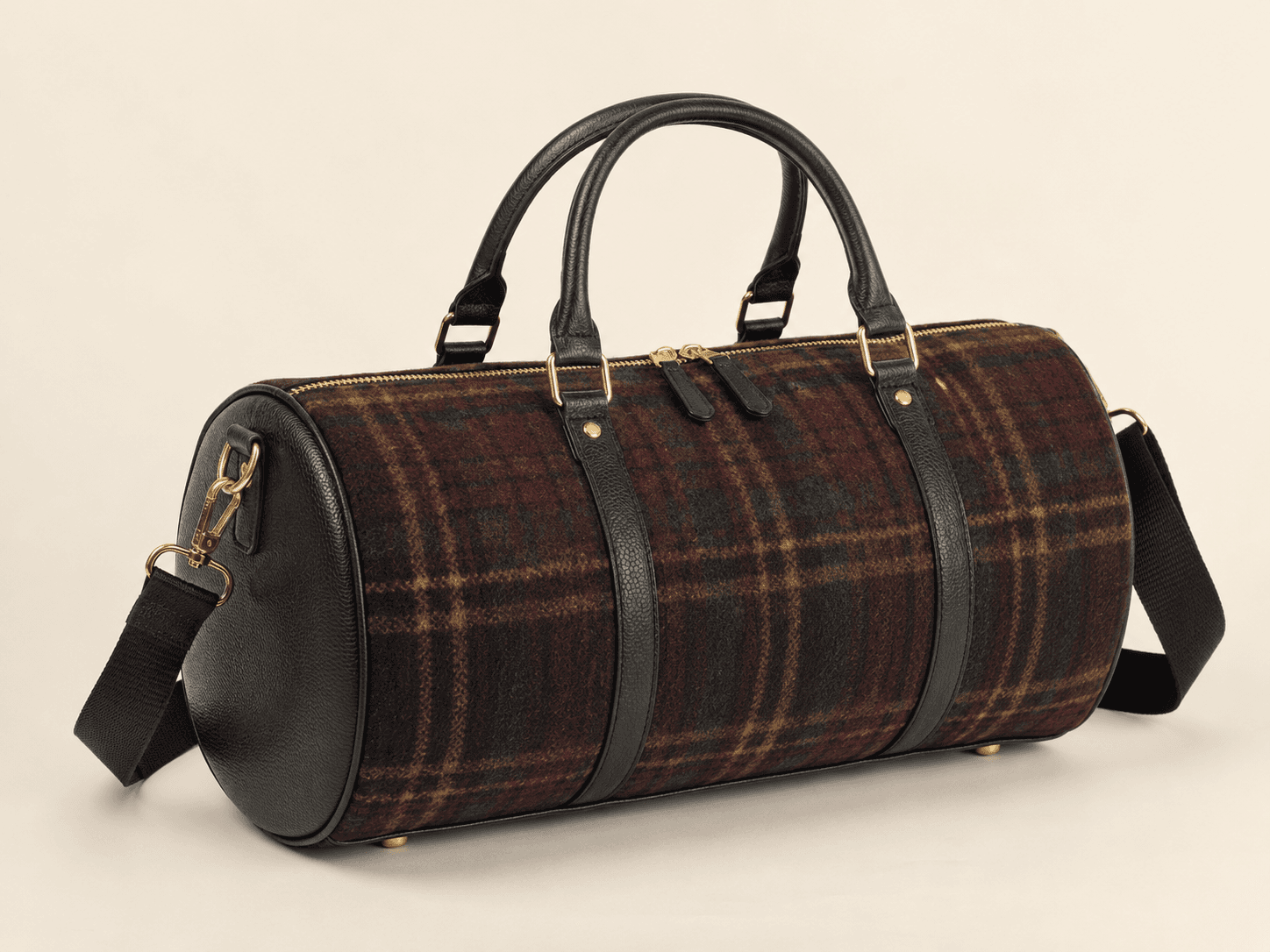
We normally recommend choosing the product that shows the collection most clearly. A commuter tote offers broad panels; a bowler bag introduces curves, zip structure and handles; a weekend duffle tests the check across a larger volume. The right lead product depends on the intended retail programme and on the construction questions the brand needs to settle first.
Once the lead bag has a workable pattern, trim and hardware direction, smaller products can inherit an approved visual language. That reduces open decisions, but it does not remove the need for product-specific samples. Card-slot tension, fold bulk and edge finishing have little in common with a large tote body.
Change the Pattern Scale Between a Tote and a Cardholder
Can a tote and a cardholder use the same approved tartan? Yes, but using the same textile repeat at the same scale may give very different results. A large check can read comfortably across a tote panel while leaving only one stripe and a partial square on a cardholder. A smaller repeat may retain the character of the artwork on small goods.
Scale is confirmed by physical proof and sample. The team should record the repeat size, panel direction and the part of the artwork intended to appear on each visible face. If more than one scale is used, label the files and approvals clearly so cutting instructions cannot be confused.
Record What the Sample Must Confirm
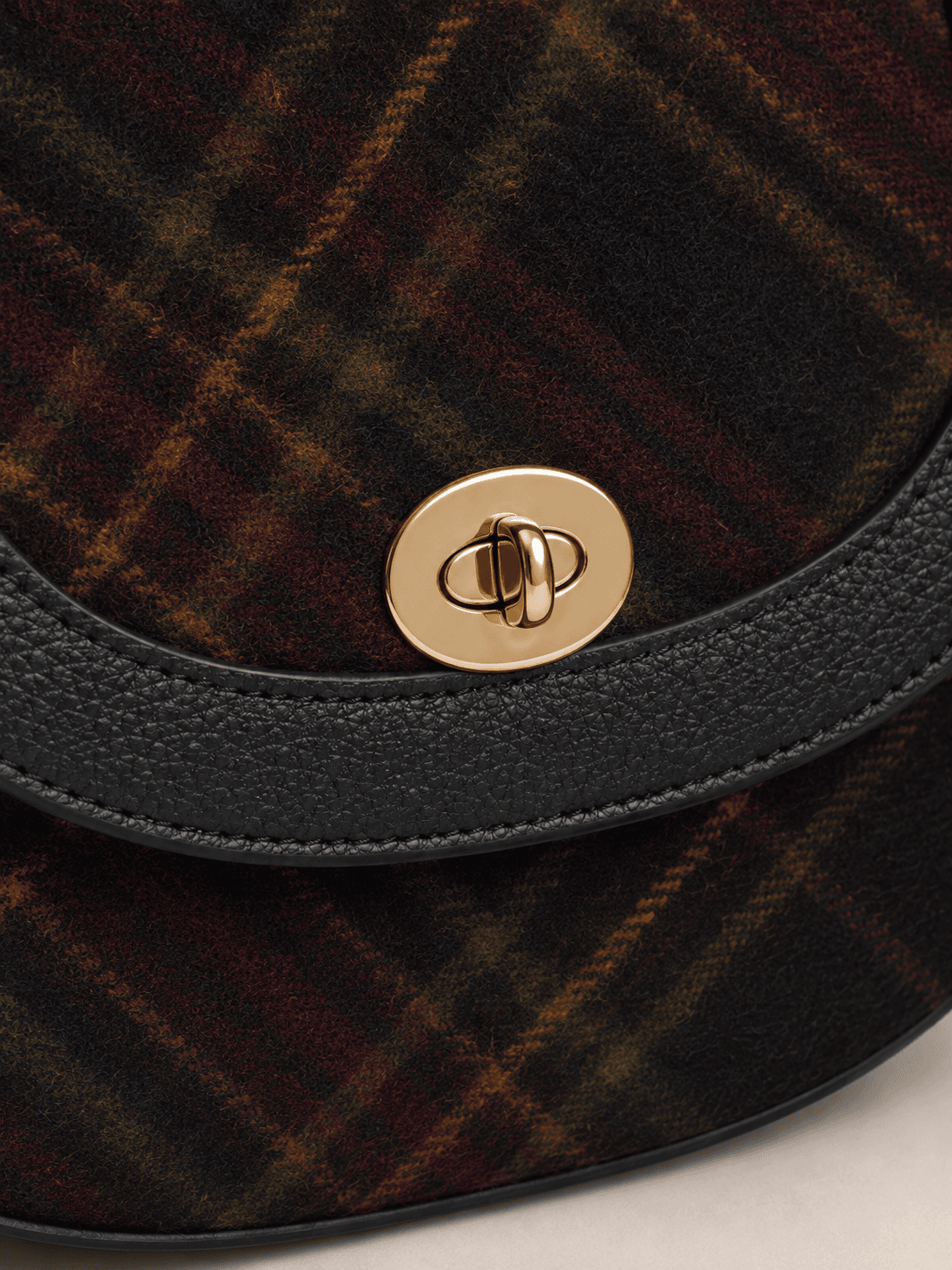
A tartan sample is not approved only because the silhouette looks right. The review should cover textile weight and hand feel, pattern position, seam alignment priorities, trim material, edge treatment, metal finish, lining, pockets, straps, logo and packaging. Curved seams and gussets may shift the check even when a flat pattern looks aligned.
Record revisions against dated photographs or a marked specification. For tartan products, include the position of key lines and the direction of every important panel. An approved sample and its written record should agree; otherwise the production team is left to decide which reference takes priority.
Why MOQ Must Be Assessed by Material and Style
There is no responsible fixed MOQ for every custom tartan project. The answer depends on whether the textile is available or custom developed, how many colours are required, the consumption and cutting yield, the number of styles, and whether hardware, lining or packaging also needs custom production.
A simple cardholder and a reinforced travel bag do not create the same material or assembly plan. A quotation should therefore separate confirmed requirements from optional features and open decisions. That gives the buyer a clearer view of what is driving quantity, cost and timing.
Prepare a Useful OEM Quotation Brief
What information is needed for an OEM quotation? Send the product types, target dimensions, reference images or technical packs, tartan artwork, colour references, material direction, logo method, functions, packaging, expected quantity, destination market and required delivery window.
Flag anything that is still optional. The factory can then identify which questions affect feasibility, which choices can wait for sampling and which components need supplier confirmation. A concise, honest brief is more useful than a polished deck that leaves dimensions and quantities unstated.
Before requesting a quotation
- Product list and lead style
- Dimensions and functions
- Artwork and repeat size
- Material and trim direction
- Logo and packaging
- Quantity, market and timing
Continue the development review with Tartan Fabrics, Tartan Collection, Tartan Bags, Tartan sampling checklist, Start an RFQ.